
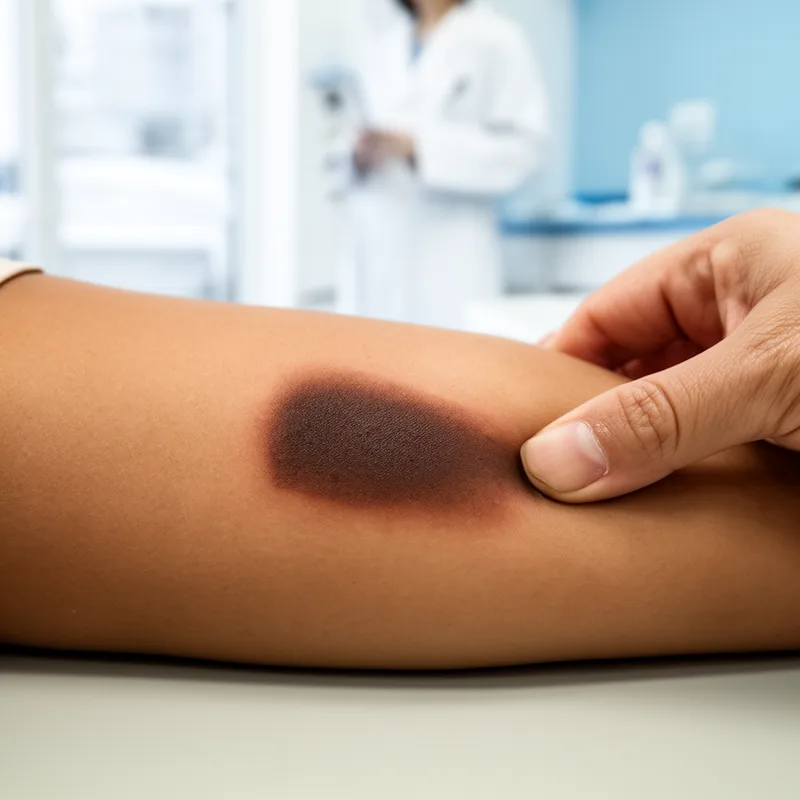
melanoderma
- noun
- /ˌmɛləˈnoʊdərmə/
- Specialized
- The dermatologist diagnosed him with melanoderma after noticing pronounced skin darkening.
Examples
-
Sun exposure can worsen melanoderma in susceptible individuals.
-
After years of medication, the patient developed melanoderma on her arms.
-
She was diagnosed with melanoderma last year.
-
The doctor explained that melanoderma can be caused by various factors.
-
The dermatologist diagnosed him with melanoderma after noticing pronounced skin darkening.
-
Sun exposure can worsen melanoderma in susceptible individuals.
-
After years of medication, the patient developed melanoderma on her arms.
Synonyms
 1
7.7
1
7.7

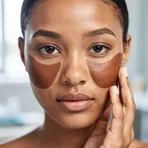
Skin that becomes darker in some areas because it has more colour, often after sun, injury, or illness
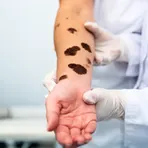
Dark patches that form when the body stores extra pigment, often on the skin
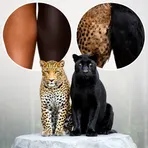
A condition in which animals and people have extra dark pigment and very dark skin, fur or feathers
Antonyms

- Specialized

 1
8.8
1
8.8
A part of the skin that is lighter than normal because it has less color
How Dark

Surface Forms
Morphology
melanoderma = melano + derma
The meaning is compositionally 'dark' + 'skin' (melano- + -derma), so the relation is direct for learners familiar with medical combining forms, but these combining forms are technical and may be unfamiliar to an average B1 learner.
Etymology
Melanoderma comes from Greek parts melano- meaning 'black', the same root in melanin, and -derma meaning 'skin', as in dermatologist. So it literally means 'black skin', which is why melanoderma describes unusually dark skin when the body makes more melanin.