
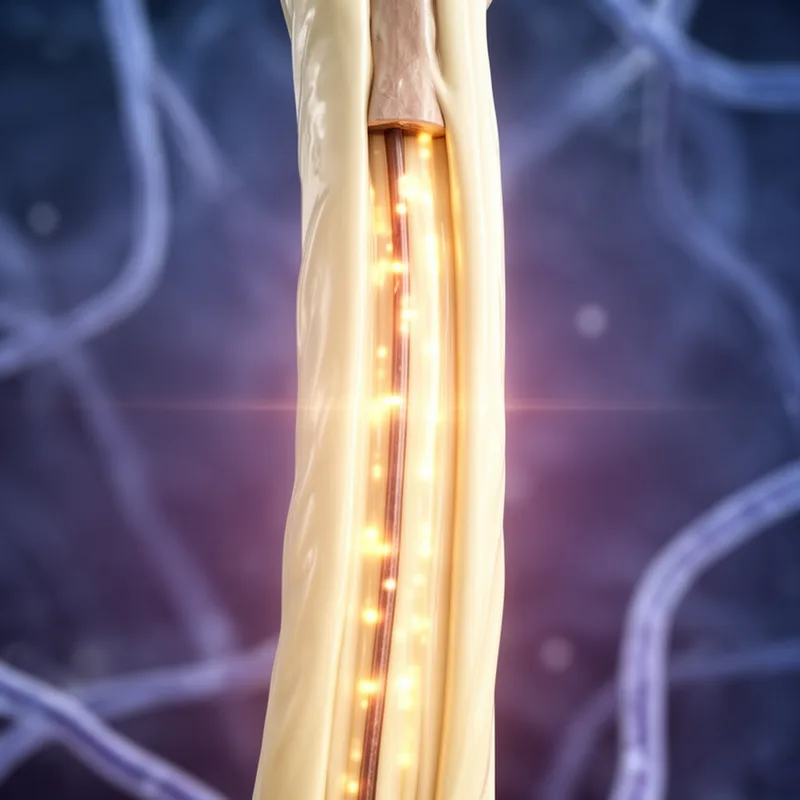
medulla
- noun
- /məˈdʌlə/
- Specialized
- The medulla is crucial for the nervous system.
Examples
-
In humans, the medulla regulates vital functions.
-
Damage to the medulla can disrupt nerve signal transmission in the body.
-
Scientists studied the role of the medulla in neurological disorders such as multiple sclerosis.
-
The medulla is essential for the rapid conduction of electrical impulses along nerve cells.
-
The medulla forms a protective sheath around the central part of the nerve fibers.
-
The medulla is composed of white fatty material that insulates some nerves.
-
In certain animals, the medulla plays a critical role in the functioning of their nervous system.
Synonyms

 7
8.6
7
8.6

A white fatty layer around nerve fibers that helps signals travel quickly
 1
7.2
1
7.2
A fatty layer around nerve fibers that helps signals travel fast

A thin fatty layer that covers nerve fibers and helps signals travel faster
Compounds

- Specialized
2
6.9
The lower part of the brain that controls breathing, heartbeat, and blood pressure
- Specialized
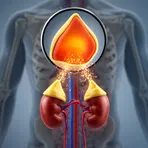
The inner part of the small gland above each kidney that makes stress hormones like adrenaline

- Specialized
The part of the nervous system inside the spine that carries messages between the brain and the body
Surface Forms
Etymology
Medulla comes from the Latin word medulla, meaning 'marrow' or soft inner part. That's why doctors call the white, fatty inner layer around some nerve cells the medulla—it is the important inner material that helps protect and speed signals.