

lord
 422
4.8
422
4.8

- noun
- /lɔrd/
- The local lord ruled over the village with wisdom and fairness.
- drug lord
- lords of creation
- feudal lord
Loading YouTube…
Watch on YouTubeAnd the the the Lord or master then takes over.
- And the the the Lord or master then takes over.
- Could it be that A Duel with the Vampire Lord is better?
- I must be the Lord of something.
- One of them, a Thoan, a Lord who has lived thousands of years.
- Like you can't have Lord of domain over that.
- So they, they, you know, Lord knows what they're sucking up.
- No, the freedom to rule itself to be Lord in its own desert.
- Lord, you're an even bigger Lord stand than me, you know, Yeah.
- And he said subtle as the Lord, but malicious he is not.
- But I love my dad and Lord knows he loves football.
- You know that I mean just I feel like the Lord just put that go Celine in me.
Examples
-
The servant stands before his lord, respectfully, ready to do his lord's will.
Academic text (1992) -
How many years did a man have to serve his lord in order to receive favors from him?
Fiction book (1993) -
Now the good lord has seen to that.
-
Will you be lord of all the world?
-
In effect, my lord, yes.
-
His father had emphasized that he must serve his new lord diligently in all things, of course.
Fiction book (1992) -
The warrior died for loyalty to his lord rather than some abstract juridical ideal or territory.
Academic text (1991) -
"I've been trying very hard to forget about that, my lord," the boy replied with a pained expression.
Fiction book (1993) -
Only in defeat could Uaxactun have accorded a lord of a rival city such recognition.
Academic text (1991) -
He said one night to Divim Tar, Lord of the Dragon Caves.
Synonyms
 ∞
1.0
∞
1.0
A man who rules a country and usually gets the job from his family
 ∞
3.7
∞
3.7
A person in charge of a group or place
 524
3.5
524
3.5
A man who rules an empire made of many countries
 153
2.1
153
2.1
A person who has power over a country or its people
 63
5.3
63
5.3
A person from a high social family with a title
 21
8.4
21
8.4
A person who has great power and controls a country or people
 20
8.0
20
8.0
A person with the lowest rank of noble title, often given by a king or queen
 5
9.9
5
9.9
A Latin title for a master or lord in old religious and historical texts
 2
9.5
2
9.5
A rich, powerful man who holds land from the king and gives soldiers to the king
 1
9.9
1
9.9
A powerful noble who gets loyalty and service from knights and farmers
Antonyms


Idioms


- Formal
To die as a Christian who trusts in God and expects life after death

An informal phrase to show hope that something will happen if nothing goes wrong
Compounds


- Formal
6
8.2
The year in the Christian calendar used when writing dates like AD 1865
 3
8.6
3
8.6
A senior government official in the United Kingdom who leads the courts and presides in the House of Lords


- Literature

 1
6.6
1
6.6
A situation where people become violent and rules break down, like in the novel
 1
9.9
1
9.9
A senior UK government official who has an old title, no set duties, and sometimes has extra responsibilities


A Christian festival twelve days after Christmas to remember the visit of the wise men to the baby Jesus
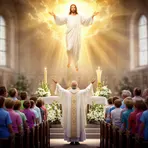
A Christian holiday marking Jesus going up to heaven forty days after Easter
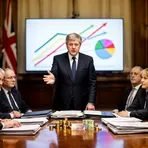
A senior government minister responsible for economic strategy, usually the prime minister
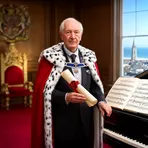

A senior government officer in the United Kingdom who leads the courts and chairs the House of Lords




How Powerful

Surface Forms
Etymology
The word lord comes from an old English word hlaford, built from hlaf 'loaf' and weard 'guardian'. A hlaford was the person who kept the bread and looked after the household, so a lord became someone who provides for others and has power over them.