

to log
 37
4.4
37
4.4

- verb
- /lɔg/
- After the storm, they started to log the fallen trees to clear the area.
- selectively logged
- logged forests
- logged areas
Examples
-
Instead of permitting these areas to be logged, federal agencies are supposed to provide replacement timber to purchasers.
Academic text (1997) -
The company plans to log several acres of forest for new housing developments.
-
Situation 4: Old growth forest in nearby hills is to be logged for the first time.
Academic text (1995) -
Well, I mean, we're logging the forests, we're closing in on 'em.
-
The area was lightly logged 50-60 years ago, as indicated by large ponderosa pine stumps.
Academic text (2016) -
In the northern regions, people have been known to log large amounts of timber for export.
Synonyms


Phrasal Verbs




Compounds




 1
4.6
1
4.6
A video of a burning fireplace that people show on TV or online to make a room feel cozy

- Archaic
A knotted rope on a reel attached to a wooden block used to measure a ship's speed






- Archaic
A cigar-shaped tool with spinning fins that measures a ship's speed through the water

- Specialized
A large log with good wood that is cut into boards for furniture or building

- Archaic
A long round object with rotating fins that measures how fast a ship moves in water

- Archaic
A device towed behind a ship that measures how fast it moves through the water
- Archaic
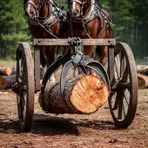
An old logging machine that lifts one end of a log with hanging tongs between its wheels

- Archaic
A historical logging machine that lifts one end of a log with hanging tongs between wheels to move it

How Extensive

Surface Forms
Etymology
The verb log (to cut down trees) comes from the noun log: people cut trees into logs, so to log is to remove trees and make timber.