

to log
 175
3.0
175
3.0

- verb
- /lɔg/
- Students are required to punch in on their timecards to log the amount of class time.
- log data
- log information
- automatically logged
Loading YouTube…
Watch on YouTubeNo, we we log, you know, some fairly interesting things.
- No, we we log, you know, some fairly interesting things.
- Even children's playground insults have been logged as non crime hate incidents.
- And normally when I eat it, you can then log it in My Fitness Pal.
- So if you're building a library that logs things, log the data untransformed.
- At least I can log the experience.
- Your data isn't logged, it stays yours and yours alone.
- And so you'll be able to log that on the app for us.
- And remember, you can log for symptoms other than COVID as well on the app.
- We use machine vision to take the results, log them.
Examples
-
After each meeting, the secretary would log the minutes for official records.
-
She decided to log her exercise routine to track her progress over time.
-
And what happens is, yes, we ask to log a lot of different things.
-
And normally when I eat it, you can then log it in My Fitness Pal.
-
And we really want you to keep logging, keep telling us about your vaccines.
-
Students from around the world can log onto a virtual classroom via an intranet or internet server.
Academic text (2002) -
Preschool and kindergarten teachers logged their communication with families in notebooks designed for this purpose.
Academic text (2005) -
KCRA news staff meticulously logged the film that aired in that first newscast.
Academic text (2017) -
Please remember to log your daily activities in the project management software.
Synonyms
 365
3.4
365
3.4
To write or save information to show proof
 158
1.3
158
1.3
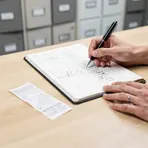
To write something down so you do not forget it
 70
5.7
70
5.7
To write events in the order they happened
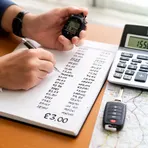
To write down and add up time or distance in a record

To record changes on a computer so they can be restored after a crash
Phrasal Verbs


Compounds





 1
4.6
1
4.6
A video of a burning fireplace that people show on TV or online to make a room feel cozy

- Archaic
A knotted rope on a reel attached to a wooden block used to measure a ship's speed






- Archaic
A cigar-shaped tool with spinning fins that measures a ship's speed through the water

- Specialized
A large log with good wood that is cut into boards for furniture or building

- Archaic
A long round object with rotating fins that measures how fast a ship moves in water

- Archaic
A device towed behind a ship that measures how fast it moves through the water
- Archaic
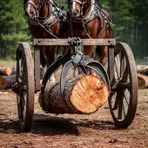
An old logging machine that lifts one end of a log with hanging tongs between its wheels

- Archaic
A historical logging machine that lifts one end of a log with hanging tongs between wheels to move it

How Detailed
30
3.9
 175
3.0
∞
2.5
∞
2.0
951
1.6
175
3.0
∞
2.5
∞
2.0
951
1.6
- Informal
27
2.9
Surface Forms
Etymology
The verb log (to make a record) comes from sailors who wrote measurements in a 'logbook' named after the wooden measuring log, so to log something now means to write it down as an official record.