

to clear-cut
 2
6.1
2
6.1

- phrasal verb
- /ˈklɪrˌkʌt/
- Specialized
- Loggers have clear-cut timber down to the river beds and raised the water temperature so the fish cannot spawn.
- clear-cut harvesting
Examples
-
A logging company has clear-cut this section of woods ahead of other construction processes.
Academic text (2012) -
In the past, developers clear-cut trees, but now they save trees or wetlands because doing so yields a premium price for their properties.
Academic text (2008) -
Some forest parcels may have been clear-cut but later returned to forest or were developed.
Academic text (2012) -
In the Pacific Northwest, companies bought up timber allotments, clear-cut them, and left.
Academic text (1995) -
Many areas were clear-cut, after which they were usually swept by fires (deliberately set, accidental, or natural) that burned out of control.
Academic text (1990) -
I used to enjoy shade on mid-day walks, but much of it has been clear-cut, and the site really is looking rather hot, dry, and barren.
Blog text (17) -
Northern Anishinaabe communities, for example, are situated in some of the most lucrative forests in Canada, and as a result, clear-cut logging by large multinational corporations is intensive.
Academic text (2004) -
In a 1956 conference, foresters estimated that 38 percent of Mexico's forests had been clear-cut and were incapable of producing commercial harvests for 20 to 30 years.
Academic text (2003) -
By the 1880s, railroads had been constructed through central Mississippi, timber companies had begun to clear-cut the yellow pine and broadleaf forests, and more land was opened for cultivation.
Academic text (1990) -
The logging crew was hired to clear-cut the designated area in order to prepare for new construction.
Synonyms
 49
1.9
49
1.9
To make a tree or plant fall by cutting it at the base
 29
4.2
29
4.2
To use a large pushing machine to flatten land or to remove things by force
 12
2.1
12
2.1
To cut through the trunk of a tree so it falls
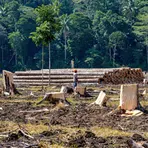 3
6.0
3
6.0
To cut down most trees in an area so very few remain
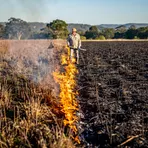 1
5.6
1
5.6
Clear land of plants by burning them
 1
6.6
1
6.6
To cut down all the trees in an area at once

To cut down all the trees in an area at once
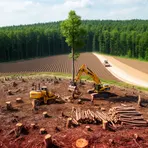
To cut down all trees in an area to use the land
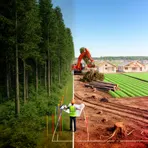
To remove trees or change the official status of land so it is no longer a forest
Antonyms

How Complete

Surface Forms
Morphology
Etymology
Clear-cut as a verb comes from the forestry action of cutting all the trees in an area. The parts clear ('free from') and cut ('cut down') show that to clear-cut is to make land 'clear' by a single, large 'cut'.