

judger
- noun
- /ˈdʒʌdʒər/
- Formal
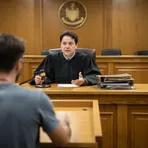
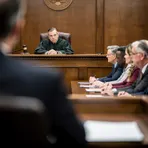
- In the legal hearing, the judger listened attentively to the arguments presented by both parties.
Examples
-
The judger announced the verdict.
-
The judger listened carefully to both sides before announcing the decision.
-
In the competition, the judger evaluated each performance based on strict criteria.
-
As a fair judger, she always considered all the evidence before making a ruling.
-
In the courtroom, the judger listened carefully to both sides.
-
The judger carefully reviewed the evidence before making a ruling on the case.
-
As the chief judger, he ensured that the proceedings were fair and just for everyone involved.
Synonyms

 ∞
2.7
∞
2.7

An official who hears and decides cases in court
 298
5.3
298
5.3
A judge on a high court such as a supreme court
 63
7.2
63
7.2
A local official who hears small legal cases and decides on minor crimes or disputes
 28
6.7
28
6.7
A person who settles a disagreement and makes a final decision
 19
6.7
19
6.7
A person who hears a dispute outside court and makes a decision both sides must accept
 13
5.1
13
5.1
A person who leads a court trial and decides about the law and evidence
 7
9.0
7
9.0
A lawyer who acts as a part-time judge in some UK towns
 3
7.7
3
7.7
A person who decides a disagreement between people or groups
 3
8.7
3
8.7
A person like a judge or jury who decides what happened in a legal case
 3
6.9
3
6.9
A person chosen by a government agency to listen to cases and make decisions
 1
7.0
1
7.0
A person who announces official decisions, like court verdicts or competition results


 1
7.2
1
7.2
A government official who listens to cases and makes decisions or recommendations
 1
8.1
1
8.1
A judge or other person who decides and announces a punishment in court

A judge or court with power to hear and decide criminal cases

A person who listens and decides who is right in a dispute or competition
How Official

Surface Forms
Morphology
Etymology
Judger comes from judge, a word that originally meant 'to decide' or 'say what is right'. That is why a judger in a legal or formal hearing is the person who looks at the facts and makes the official decision.