
isomorphous
- adjective
- /ˌaɪsəˈmɔrfəs/
- Specialized
- The crystals of the two compounds are isomorphous, sharing similar structures despite their different chemical compositions.
- isomorphous replacement
Examples
-
So let's take a look at the prototypical isomorphous phase diagram.
-
There's a tiny little dip, but by and large it's an isomorphous phase diagram.
-
Among the early techniques based on binding were single and multiple isomorphous replacement (SIR and MIR).
Academic text (2006) -
Conventionally, heavy-atom labels have been used in the isomorphous replacement method, but increasing use is being made of the multiwavelength anomalous diffraction method, which exploits synchrotron radiation in resonance conditions.
Academic text (1995) -
The surge of recent interest has resulted primarily from three factors: the ability to obtain atomic-resolution (below 1.2) data in favorable cases at modern synchrotron sources, the development of Shake & Bake3 and other advanced computer codes, and the ability to combine direct methods with the techniques of isomorphous replacement and anomalous scattering.
Academic text (2006) -
In geology, many minerals can be classified as isomorphous pairs, as they have identical crystal forms but are made of different elements.
-
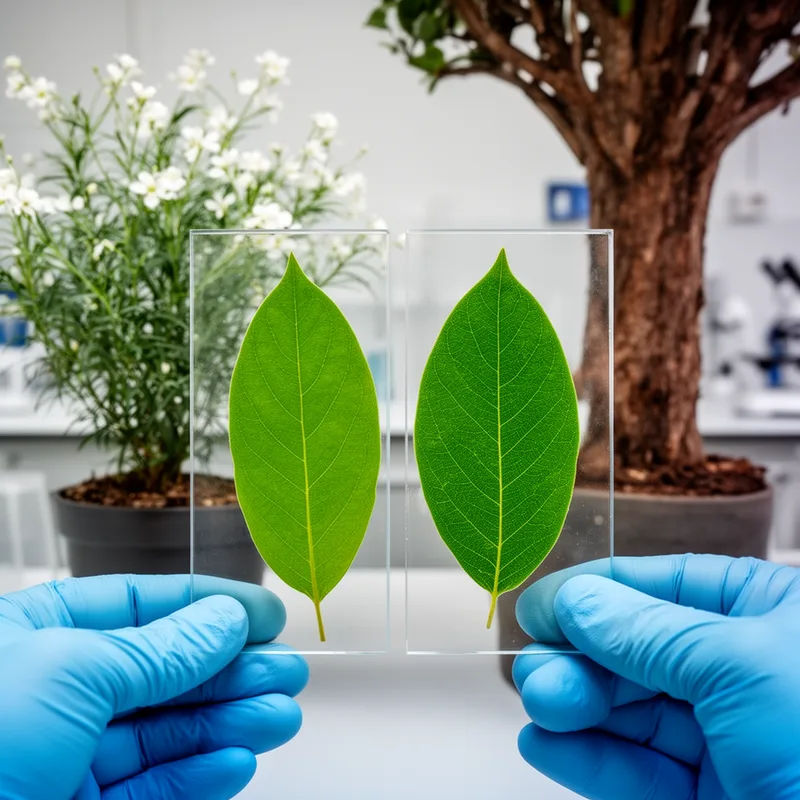
The two plants appeared isomorphous in leaf shape, yet one thrived in dry soil while the other preferred wet conditions.
Synonyms

 ∞
1.0
∞
1.0

Having some of the same qualities as another person or thing but not exactly the same
 1
9.8
1
9.8
Similar in shape or look but different inside, like two plants with different genes

 1
9.9
1
9.9
Having the same shape or parts

Looking like one thing but different on the inside
Being the same or very similar in shape and structure, like cells

Cannot be told apart from something else
Antonyms


How Similar

Surface Forms
Morphology
isomorphous = isomorph (semi-transparent) = iso + morph + ous
The base 'isomorph' is clear, but the suffix 'ous' may obscure the meaning for some learners.
Etymology
Isomorphous comes from the parts iso- meaning 'equal' and morph meaning 'form' or 'shape', so it literally means 'equal form'. That's why we use it for things that look the same in shape but come from different sources or are different in nature.