

isomorphic
 1
9.8
1
9.8

- adjective
- /ˌaɪsəˈmɔrfɪk/
- Specialized
- Despite their isomorphic appearances, the two species evolved from entirely different ancestors.
- remain isomorphic
Examples
-
Norms that are genuinely moral will be applicable to ranges of situational contexts precisely because they will have grasped morally significant relationships that remain stable or isomorphic across the stipulated ranges of contexts.
Academic text (1990) -
The study revealed that the isomorphic traits between the two plants allowed them to adapt to their environments despite their genetic differences.
-
In this case, GS and GS are isomorphic; they are the same graph up to relabeling.
Academic text (2011) -
Photomicrograph of the excised adenoid cystic carcinoma shows that the cells that make up the tumor are small and cuboid with isomorphic nuclei.
Academic text (2003) -
In biology, certain species exhibit isomorphic structures, having similar forms but differing functions.
Synonyms
 ∞
1.0
∞
1.0
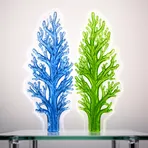
Having some of the same qualities as another person or thing but not exactly the same

 1
9.9
1
9.9
Having the same shape or parts
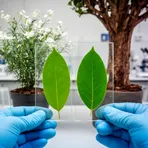
Similar in appearance but different in origin

Looking like one thing but different on the inside
Antonyms


How Similar

Surface Forms
Morphology
isomorphic = morphic (semi-transparent) = iso + morph + ic
While 'iso-' and 'morphic' are clear, the specific biological context may not be immediately obvious.
Etymology
Isomorphic comes from iso- meaning 'equal' and morph meaning 'form' or 'shape', like the morph in metamorphosis. So in biology, something isomorphic looks the same in shape even when it is different inside or by its genes.