

imprecation
 2
9.9
2
9.9

- noun
- /ˌɪmprɪˈkeɪʃən/
- Offensive
- In a fit of anger, she unleashed a series of imprecations aimed at her dishonest business partner.
- muttered imprecations
- shouted imprecations
- imprecation under his breath
Examples
-
Hosteen Nakai considered this, exhaled a cloud of blue smoke, and muttered some imprecation under his breath.
Fiction book (1993) -
After he lost the game, he shouted an imprecation at the referee, blaming him for the defeat.
-
All of these were pointing at the boat in which he sat and screaming imprecations.
Fiction book (1998) -
There were only the herdsmen running along beside the cattle, screaming imprecations, unable to turn them back.
Fiction book (1994) -
When they heard Buldram's cry, followed by a stream of vivid imprecations, they knew their plan had succeeded.
Fiction book (2002) -
Snatching up Muffy, muttering imprecations under her breath, she hurried after Frankenstein.
Fiction book (1995) -
The phrases he had rehearsed so often piled out of his mouth and continued even when he heard someone mumbling imprecations about the "Abomination's corruptions."
Fiction book (1991) -
After dropping the traveler at the hotel in the piazza, the driver hurls imprecations and threatening gestures at the two stowaways, whom he has only just discovered.
Fiction book (1998) -
A shrieking milling crowd of 1,500 men, women, and children who kept up an unceasing babble and shouted imprecations and threats defied Begin's authority.
Academic text (1998) -
The villagers whispered imprecations against the witch who they believed had cursed their crops.
Synonyms
 262
5.5
262
5.5
A magic spell that brings harm to a person or thing
 3
9.9
3
9.9
Words spoken to wish harm on someone


 1
9.6
1
9.6
A spoken wish that something bad will happen to someone

A wish that bad things will happen to someone

A strong spoken curse that shows deep hatred or disgust
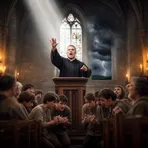
A serious warning that God will punish people who do wrong
Antonyms


How Hostile
- Literature
38
9.4

- Formal
- Literature
3
9.9
- Offensive
2
9.9
- Offensive
49
3.9
Surface Forms
Morphology
imprecation = imprecate (opaque) = im + precate + ion
Although the structure is imprecate + -ion, the verb 'imprecate' (and the root 'precate') is rare/archaic and learners cannot reliably deduce the meaning 'spoken curse' from its parts.
Etymology
The word imprecation comes from Latin parts im- and precari, where precari means 'to pray' and im- means 'against'. So an imprecation is like a 'prayer' that asks harm on someone, which is why it means a spoken curse.