
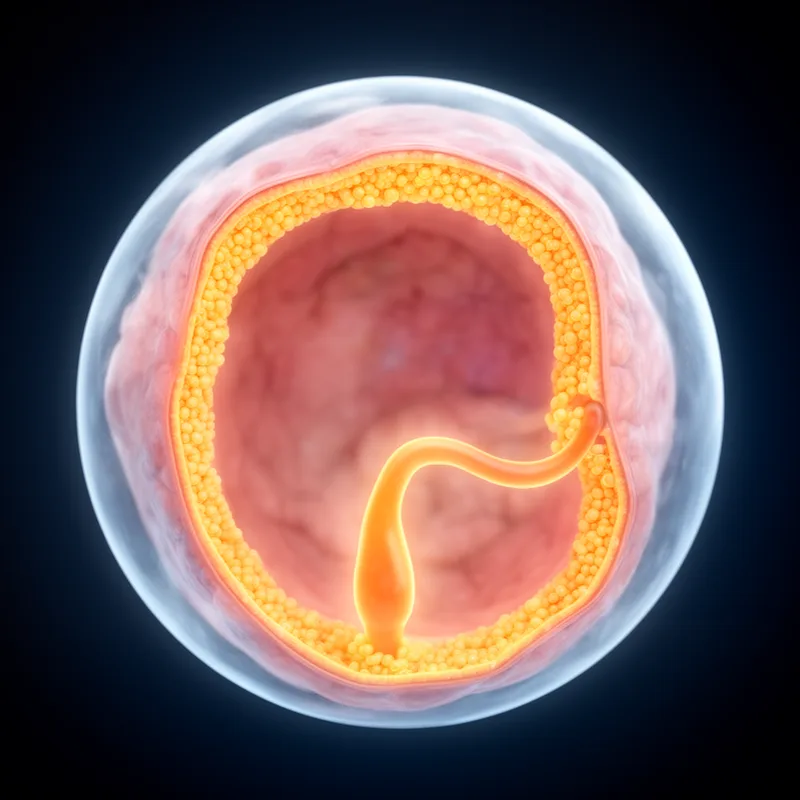
hypoblast
- noun
- /ˈhaɪpəˌblæst/
- Specialized
- During development, the hypoblast contributes to the formation of the gut lining.
Examples
-
Abnormal differentiation of the hypoblast can result in congenital defects.
-
The hypoblast helps create the respiratory tract during the early stages of an embryo.
-
The hypoblast is one of the first structures observed in early embryogenesis.
-
The hypoblast forms during the early stages of embryonic development.
-
In mammals, the hypoblast contributes to the formation of the yolk sac.
-
During embryonic development, the hypoblast is essential for forming the digestive tract lining.
-
The early development of the hypoblast marks the formation of vital structures in the embryo.
Synonyms

The inner layer of an embryo that becomes the lining of the gut and lungs
The inner layer of cells in an embryo that becomes the lining of the gut and lungs
A layer inside an embryo that becomes the lining of the gut and lungs

Innermost layer of an embryo that becomes the lining of the digestive and breathing systems
Surface Forms
Morphology
hypoblast = blast (semi-transparent) = hypo + blast
The word is structurally clear as hypo- + blast, but the term is specialized biological vocabulary rather than a fully transparent everyday formation.
Etymology
Hypoblast comes from Greek parts hypo- 'under' and blast 'sprout' or 'young cell'. So the word names the lower early layer in an embryo that later becomes the lining of the gut and the breathing tubes.

