
endoblast
- noun
- /ˈɛndəˌblæst/
- Specialized
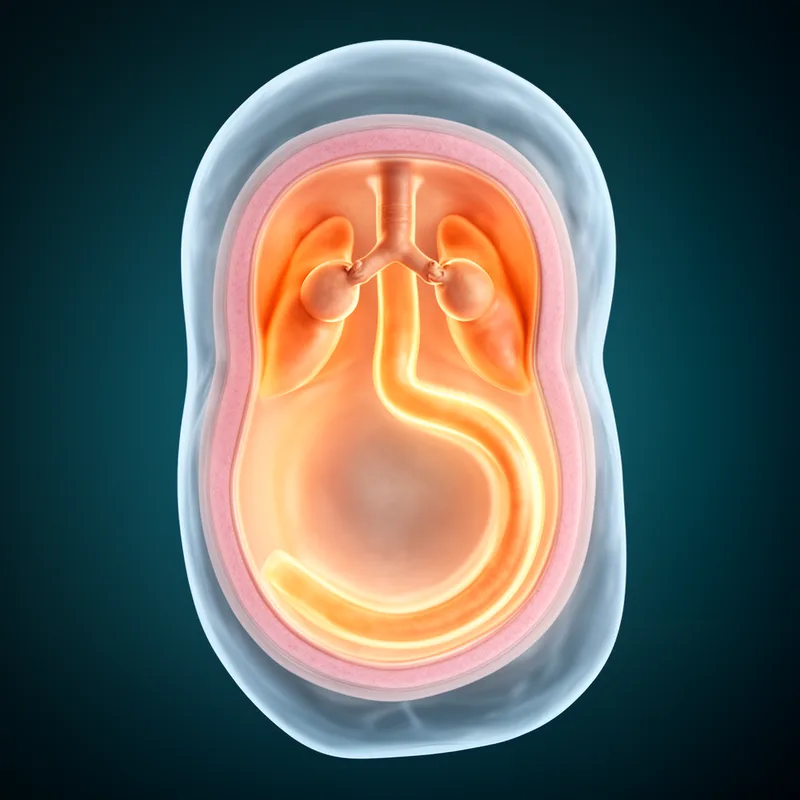
- During early embryonic development, the endoblast differentiates to form structures such as the gut lining.
Examples
-
The respiratory system is also derived from the endoblast in vertebrate embryos.
-
Scientists study the endoblast to understand congenital disorders of the digestive tract.
-
The endoblast forms during the early stages of embryonic development.
-
An endoblast gives rise to the digestive tract.
-
During early embryonic development, the endoblast differentiates to form the gut lining and parts of the respiratory system.
-
Scientists study the endoblast to learn how it contributes to the formation of the digestive tract.
-
The endoblast is the innermost germ layer that develops into the lining of the lungs and intestines.
Synonyms

Innermost layer of an embryo that becomes the lining of the digestive and breathing systems

The inner layer of cells in an embryo that becomes the lining of the gut and lungs

The inner layer of an embryo that becomes the lining of the gut and lungs

A layer of cells inside an embryo that forms the lining of the gut and breathing tubes
Surface Forms
Morphology
endoblast = blast (semi-transparent) = endo + blast
Formed from the combining form 'endo-' (inner) + 'blast' (immature cell); the term's structure is clear but it is technical vocabulary that may be unfamiliar to general learners.
Etymology
The word endoblast joins endo- meaning 'inside' and blast meaning 'bud' or 'young cell', so it names the inner layer of early embryo cells that will grow into the lining of the gut and lungs.

