
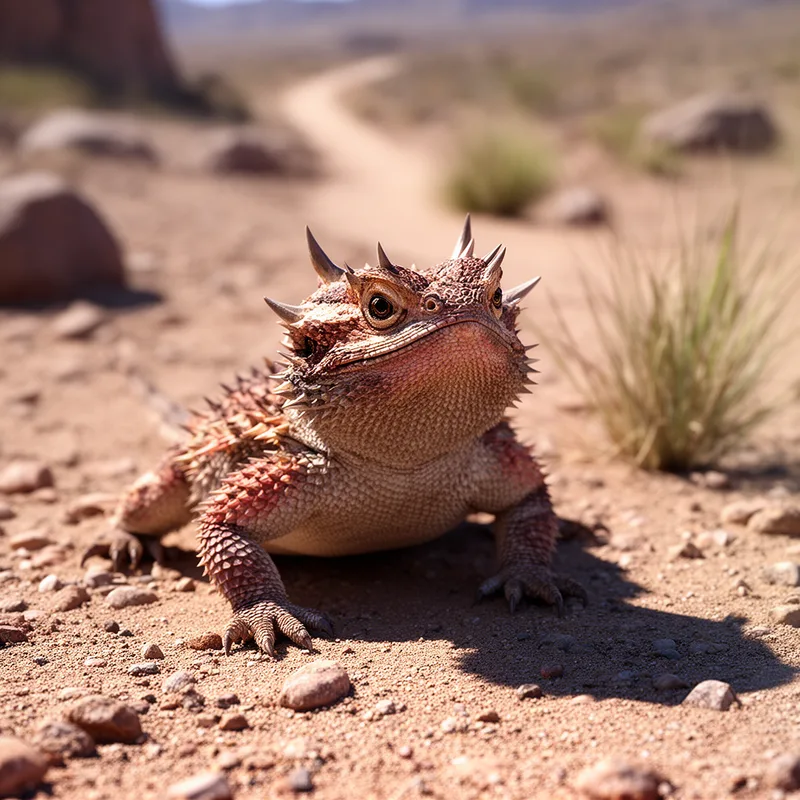
horned lizard
 1
7.5
1
7.5

- noun
- /hɔrnɪd ˈlɪzərd/
- US
 :
lagarto cornudo
:
lagarto cornudo
- Texas horned lizard
- female horned lizard
- horned lizard can squirt blood
Examples
-
They decided to focus on a study of the short-horned lizard prevalent in the area.
Academic text (2001) -
As the project continued, it became more and more clear that the horned lizards were on the decline because of Argentine ants.
Academic text (2010) -
Waterville Elementary School, located in rural eastern Washington, involved farmers in a scientific study of short-horned lizards.
Academic text (2001) -
In the late 1980s, biologist Ted J. Case and zoologist Robert N. Fisher at the University of California, San Diego, were studying coastal horned lizards (Phrynosoma coronatum).
Academic text (2010) -
The Texas horned lizard is known for its distinctive spiny scales and hornlike projections on its head.
-
While hiking in the desert, we spotted a horned lizard camouflaged among the rocks.
-
The horned lizard can be identified by its unique ability to blend into its arid environment.
Synonyms
 1
7.5
1
7.5
A small lizard that eats insects and has sharp spines on its head and body

A small lizard with spines on its head and rough scales that eats insects
A small, round lizard with a short body and spines from North and Central America

A spiny horned lizard that lives in dry parts of Texas and nearby states
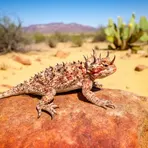
A small spiky lizard with horns and a flat body from dry areas in the southwestern United States
Surface Forms
Morphology
The meaning is directly compositional: 'horned' (having horns or hornlike projections) modifies 'lizard', so a lizard with horns/spiny projections. This adjective+noun formation is a straightforward, cross-linguistically common naming pattern, so a B1 learner who knows the parts will understand the MWE.
Etymology
The noun horned lizard names a small animal with real horned bumps on its head and a spiky lizard body. Those horns and spines help it hide or scare away predators, so the name shows what it looks like and how it 'protects' itself.