

to hobble
 22
5.6
22
5.6

- verb
- /ˈhɑːbəl/
- After spraining her ankle during the game, she had to hobble to the bench.
Loading YouTube…
Watch on YouTubeI can kind of hobble a little bit, but it's painful.
- I can kind of hobble a little bit, but it's painful.
- AG paints A vivid portrait of himself suffering under the heartland heat, hobbling along a dusty Rd.
- So he, he hobbled about, he used to stick and he said, you know, and he'd, he said all my life I thought of myself as gay.
- It's like hobbling up and down.
Examples
-
Lest this poor soul be forced to hobble for the rest of his life on one foot.
-
With A.J.'s help, Billy tearfully hobbled to the safety of his home.
Fiction book (1992) -
So I hobble out, barely able to stand.
-
I can kind of hobble a little bit, but it's painful.
-
Da! - Da, can you walk? - I can hobble!
-
And I sprained my ankle, and I had to hobble.
-
This is why you catch me either hobbling or sitting down because I can't move.
-
Buffy comes out of the boiler room and hobbles along, moving as fast as she can.
Fiction book (1992) -
Heaving a sigh of relief that the injury was not worse, he hobbled over to the door.
Fiction book (1992) -
An old woman ahead of me was hobbling along, her feet bulging swollen over the cloth slippers she wore.
Academic text (2008)
Synonyms
 179
2.8
179
2.8
To move slowly and with effort because you are tired
 73
2.6
73
2.6
To walk with difficulty because one leg or foot is hurt
 49
4.0
49
4.0
Walk in an unsteady way as if about to fall
 45
3.8
45
3.8
To walk by dragging your feet along the ground
 21
5.5
21
5.5
To walk slowly with heavy steps because you are tired
 11
5.6
11
5.6
To walk with a limp because of an injury
 6
3.7
6
3.7
Move with short uneven steps because one leg or foot hurts
 4
7.9
4
7.9
To walk awkwardly while dragging your feet
 4
8.4
4
8.4
To walk in a slow, unsteady way because of old age or weakness
 4
6.1
4
6.1
To walk unsteadily, almost stumbling because of weakness
 4
5.5
4
5.5
To walk slowly with heavy steps because you are tired
 1
9.8
1
9.8
To walk with difficulty because of a leg or foot injury
 1
5.3
1
5.3
To walk slowly with heavy steps, often through mud or when tired

To walk with small, unsteady steps
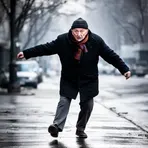
To walk in a wobbly way as if about to fall
Compounds

- US
A fast-growing evergreen bush with arching branches, dense leaves and clusters of white flowers

How Difficult

Surface Forms
Etymology
Hobble comes from an old word meaning 'to catch' or 'to tie', which gives the picture of legs held back or caught. So, to hobble is to walk with difficulty, as if your legs were partly tied.