
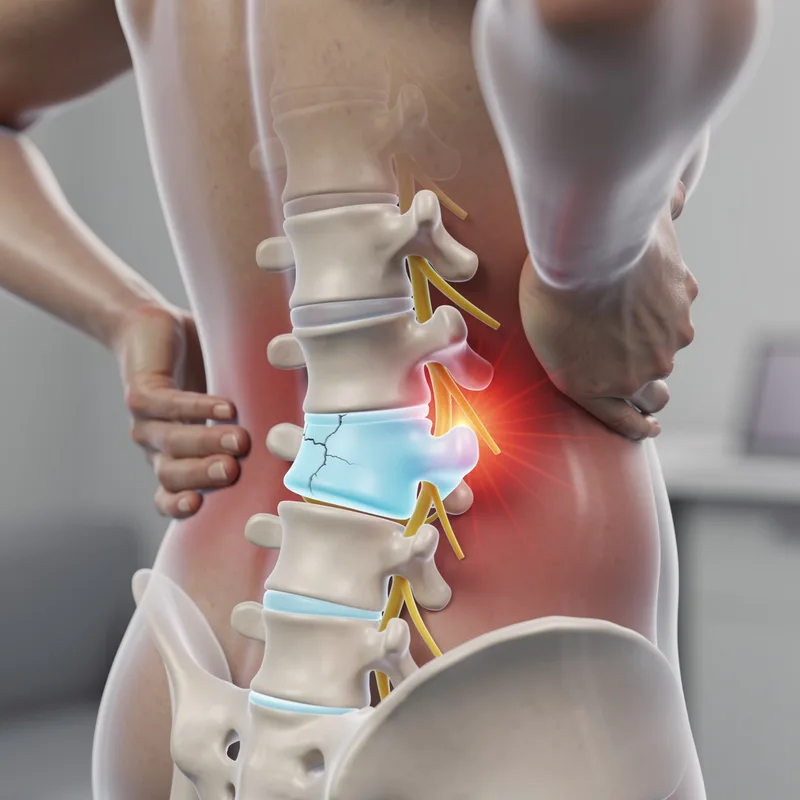
herniated disc
 4
5.1
4
5.1

- noun
- /ˈhɜrnɪˌeɪtɪd dɪsk/
- UK
 :
disco herniado
:
disco herniado
- But I would be glad to fax you my medical records so you can see my shattered L4 and three other herniated discs that almost crippled me for three years.
The truth is I have a herniated disc in my back.
- The truth is I have a herniated disc in my back.
- Like I could write out a laundry list of stuff, multiple herniated discs, tears and muscles in my hips.
- Probably the most common it would be a herniated disc.
Examples
-
Hough plans to have surgery for a herniated disc in his neck, which caused him to sit out a week of the contest, after this "Dancing With the Stars" season ends.
Blog text (20) -
The truth is I have a herniated disc in my back.
-
I had a herniated disc fixed up there.
-
I have severe chronic pain caused by herniated discs and osteoarthritis.
Blog text (7) -
I've been through sciatica and herniated discs, so I understand.
Blog text (5) -
He ultimately had to undergo two cervical surgeries to repair herniated discs in his neck.
Blog text (16) -
I have some pretty major emotional issues right now, not to mention several herniated discs that make the pickings slim for work. Even if I were able to work, would I still qualify for unemployment after a year of being on disability? There is still the challenge of finding a suitable job for my disability.
Blog text (29) -
After months of physical therapy, she finally received a diagnosis of a herniated disc in her lower back.
-
The doctor explained that a herniated disc can cause severe pain by pressing on the nerves in the spine.
-
He learned that lifting heavy boxes without proper support could lead to a herniated disc.
Synonyms
 2
8.1
2
8.1
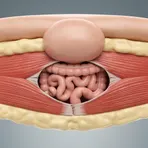
Part of an organ or tissue pushes through a tear in the surrounding muscle
 1
4.0
1
4.0
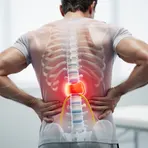
A disc between the bones of the spine that moves out of place and often causes lower back pain

A tear in the soft part between the bones of the spine that presses on nerves and causes back pain
How Severe
- Specialized

- UK
4
5.1
Surface Forms
Morphology
The phrase is morphologically compositional—'herniated' comes from 'herniate' (to bulge out) and 'disc' refers to a disk—so a learner who knows both constituents can infer a disk that has bulged out. However, the precise medical sense (rupture of soft tissue and nerve compression) and the anatomical mapping of 'disc' to the spinal intervertebral disk may be beyond B1 predictability, so the relation is only partially transparent.
Etymology
Herniated disc shows a simple image: the soft center of a disc in the spine is pushed out like jelly squeezed from a donut. That 'pushed out' part can press on nearby nerves, so the term means a disc problem that causes pain.