
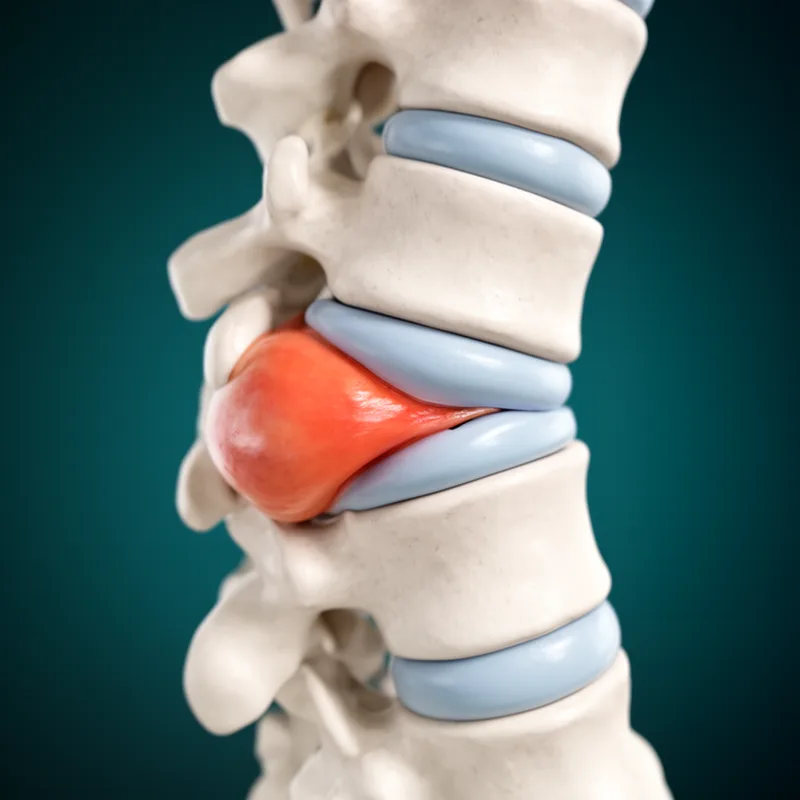
to herniate
 11
7.6
11
7.6

- verb
- /ˈhɜrniˌeɪt/
- Specialized
- Yeah, I got a herniated disk putting paper in my printer.
- herniated disc
- herniated disk
Loading YouTube…
Watch on YouTubeBecause my back is a herniated disc.
- Because my back is a herniated disc.
- And what happens is they can they can herniate literally, and they can start eking out.
- The truth is I have a herniated disc in my back.
- Probably the most common it would be a herniated disc.
- Like I could write out a laundry list of stuff, multiple herniated discs, tears and muscles in my hips.
Examples
-
Had to move them myself, which is no easy task with a herniated disk.
-
Because I remember when I herniated a disc one time I was working out, kept working out.
-
Hey, did hell you I have a herniated disk?
-
I had a herniated disk.
-
I had a herniated disc fixed up there.
-
I have severe chronic pain caused by herniated discs and osteoarthritis.
Blog text (7) -
I've been through sciatica and herniated discs, so I understand.
Blog text (5) -
She had a history of an untreated herniated lumbar disk.
Academic text (2003) -
After lifting heavy weights, he felt a sharp pain and realized he might have herniated a disc in his back.
-
The doctor explained that if left untreated, a herniated disc could lead to severe nerve damage.
How Much

Surface Forms
Morphology
herniate = hernia (transparent) = herni + ate
Formed by adding the productive suffix '-ate' to the noun 'hernia' (via the combining form 'herni-'), giving the meaning 'to cause or undergo a hernia', which is clear to learners familiar with the medical noun.
Etymology
Herniate comes from the medical word hernia, which comes from an old word meaning 'rupture' or 'bulge'. So to herniate is when part of the body 'pushes out' or breaks through the muscle or tissue that normally holds it.