
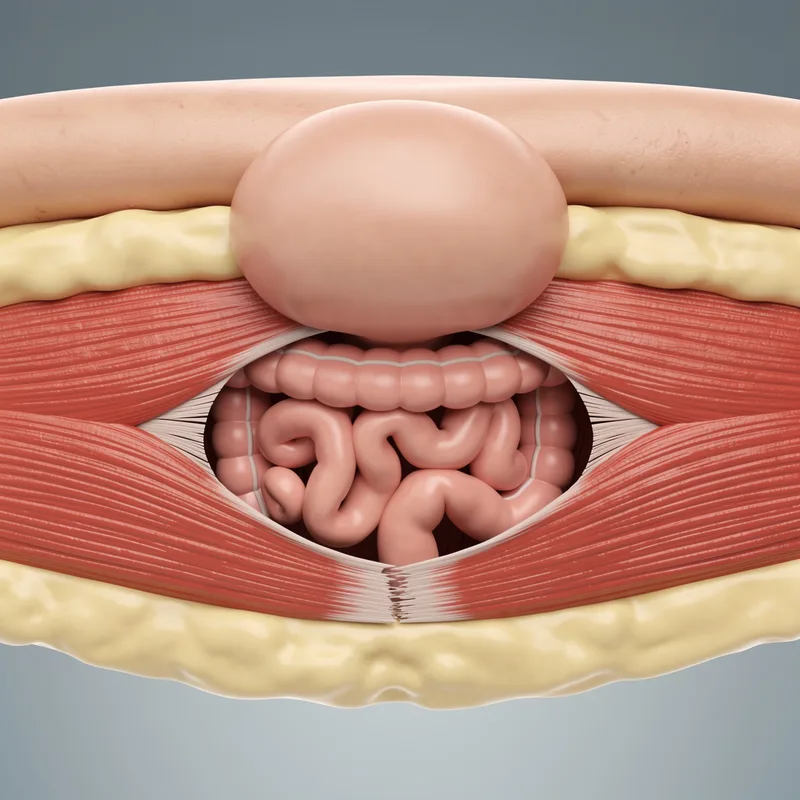
herniation
 2
8.1
2
8.1

- noun
- /ˌhɜrniˈeɪʃən/
- Specialized
- Doctors diagnosed herniation of the disc after reviewing the MRI results.
- brain herniation
- cerebral herniation
- tissue herniation
Loading YouTube…
Watch on YouTubeBut what is true is that many people have herniations of their disc and do not report pain.
- But what is true is that many people have herniations of their disc and do not report pain.
- Now I'm going to talk about one of the most potent pathways to disc herniation.
Examples
-
Despite intensive supportive care, she died 2 days later of brain stem herniation caused by persistent elevated intracranial pressure (ICP).
Academic text (2013) -
However, neurocysticercosis may manifest with life-threatening complications such as cerebral edema, infarct, hydrocephalus, or brain herniation.
Academic text (2009) -
Also, we did not find any brain tissue herniation along with the CSF leak.
Academic text (2007) -
Muscular herniation may or may not be palpable.
Academic text (2004) -
No herniation of the brain was observed in any part of the mastoid antrum.
Academic text (2007) -
But what is true is that many people have herniations of their disc and do not report pain.
-
The conclusion of the autopsy and laboratory findings was that cerebral herniation was the immediate cause of death.
Academic text (2012) -
During necropsy, signs of cerebral herniation were detected.
Academic text (2012) -
The herniation leads to pressure on the nerve root, with resulting neuromuscular signs and symptoms (Figure 9).
Academic text (2005) -
If a significant defect in the tegmen is not reconstructed, an encephalocele (herniation of brain tissue) might occur.
Academic text (2004)
Synonyms
 42
5.6
42
5.6
A lump in the body where an organ pushes through a weak spot in the muscle
Antonyms

How Severe

Surface Forms
Morphology
Etymology
Herniation comes from the Latin word hernia meaning 'rupture' or 'bulge'. So, a herniation is when an organ or tissue pushes out through a weak spot in a muscle or membrane, making a painful 'bulge' where it should stay inside.