

gray sage
- noun
- /ɡreɪ seɪdʒ/
- US
- Botanists identify gray sage by its silvery leaves and woody stems.
Examples
-
The gray sage provided excellent cover for the deer in the open field.
-
Many birds build their nests in clusters of gray sage across the western plains.
-
The gray sage grows well in dry climates.
-
Many gray sages are found in California.
-
Many birds build their nests in clusters of gray sage across the western plains.
-
Botanists identify gray sage by its silvery leaves and woody stems.
-
The gray sage provided excellent cover for the deer in the open field.
Synonyms
 8
7.7
8
7.7

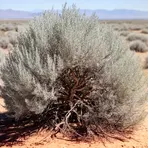
A woody bush with grey leaves and a strong smell that grows in dry areas

A low bushy plant with silver leaves that animals eat and hide in

A bush with silvery leaves that grows in the western US and gives food and shelter to deer and antelope

A low shrub with many branches and pale grey leaves that gives shelter and food to wild animals
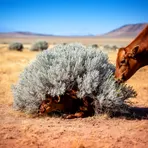
A low bush with pale grey leaves that gives animals shelter and food
Surface Forms
Morphology
The phrase is compositionally built from 'gray' (a color) and 'sage' (a herb commonly described as grey-green), so its meaning as a muted gray-green tone is directly derivable from the constituents. Using a plant name as a color label (e.g., 'sage green') is a common, cross-linguistic pattern, so a B1 learner who knows both words would readily infer the intended color sense.
Etymology
Gray sage comes from the plant's soft, silvery leaves that look gray and from its similarity to common sage, so people used that clear picture to name the low, bushy shrub where animals hide and feed.