

silver sage
- noun
- /ˈsɪlvər seɪdʒ/
- US
- The rear windows were painted with desert scenes: a moon over cactuses, a coyote on a mesa, a red sun, and silver sage; too tame, like movie shots.
Examples
-
In the desert, the silver sage is easily recognized by its silvery leaves and serves as a vital food source for local wildlife.
-
The silver sage grows abundantly in dry, rocky areas and provides essential cover for many small animals.
-
Many hikers admire the beauty of the silver sage, which thrives in the challenging conditions of the western United States.
Synonyms

A bush with silvery leaves that grows in the western US and gives food and shelter to deer and antelope

A low bushy plant with silver leaves that animals eat and hide in
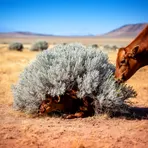
A low bush with pale grey leaves that gives animals shelter and food

A low, many-branched plant with silvery leaves that shelters wildlife
Surface Forms
Morphology
The phrase 'silver sage' is a straightforward adjective + noun combination: a type of sage that is silver in appearance, so a B1 learner who knows 'silver' and 'sage' can infer it refers to a sage-like plant with silvery leaves. This compositional adjectival modification is cross-linguistically common and follows standard English noun phrase formation, making the meaning directly derivable from the parts.
Etymology
The noun silver sage comes from the plant's pale, silvery leaves and the word sage for similar plants. The word silver points to the leaf color, and that image helps you remember it means 'a low, bushy shrub with pale leaves'.

