

gray sage
- adjective
- /ɡreɪ seɪdʒ/
- US
- She painted the kitchen cabinets gray sage to create a calm, natural atmosphere.
Examples
-
The interior designer suggested gray sage curtains to soften the room's bright color scheme.
-
He chose a gray sage suit for the interview because it looked modern yet understated.
-
The walls were painted in a soft gray sage color.
-
She chose gray sage curtains for the living room.
-
She painted the kitchen cabinets gray sage to create a calm, natural atmosphere.
-
The interior designer suggested gray sage curtains to soften the room's bright color scheme.
-
He chose a gray sage suit for the interview because it looked modern yet understated.
Synonyms
 3
3.9
3
3.9

A green color mixed with gray


 1
3.2
1
3.2
A green color mixed with gray
 1
3.0
1
3.0
A gray color with a little green in it

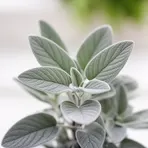
A soft grey-green color like many plant leaves

A gray color with a hint of olive green
How Green

Surface Forms
Morphology
The phrase is compositionally built from 'gray' (a color) and 'sage' (a herb commonly described as grey-green), so its meaning as a muted gray-green tone is directly derivable from the constituents. Using a plant name as a color label (e.g., 'sage green') is a common, cross-linguistic pattern, so a B1 learner who knows both words would readily infer the intended color sense.
Etymology
Gray sage as a color name comes from the plant's soft gray-green leaves, so painters and designers borrowed the leaf image to describe a 'calm', natural shade today.