
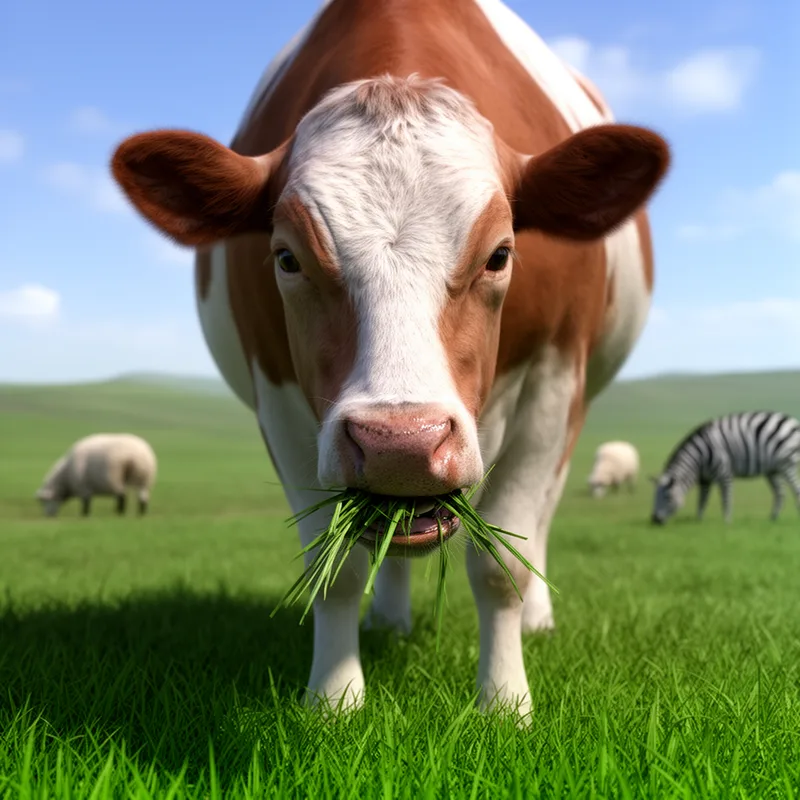
grass-eating
- adjective
- /ˈɡræsˌiːtɪŋ/
- Quentin loved sweetbreads, brains, and liver, and the local butcher saved them for Ellen, along with what he called veal, grass-eating calf.
Examples
-
He had dark, watery eyes like one of the larger grass-eating animals in the zoo, unhappy animals with long confinements.
Fiction book (1997) -
And so Paleo people would say, well, you know, we would put them on the grass, but actually there's more methane produced from grass eating cows than there is from grain eating cows.
-
The farmer raises grass-eating sheep to maintain the health of his pastures.
-
Many grass-eating animals, like cows and goats, play a crucial role in the ecosystem.
-
A grass-eating rabbit can often be seen nibbling on the lawn in the early morning.
Synonyms

 1
3.5
1
3.5

Eating mainly plants
 1
6.7
1
6.7
An animal that eats only plants
An animal that eats plants like leaves and stems
Eating plants like leaves, stems, or roots
How Herbivorous

Surface Forms
Morphology
Etymology
Grass-eating is a simple compound of grass and eat, and it literally means 'eating grass'. So, grass-eating describes animals, like cows or zebras, that feed mainly on grass.