
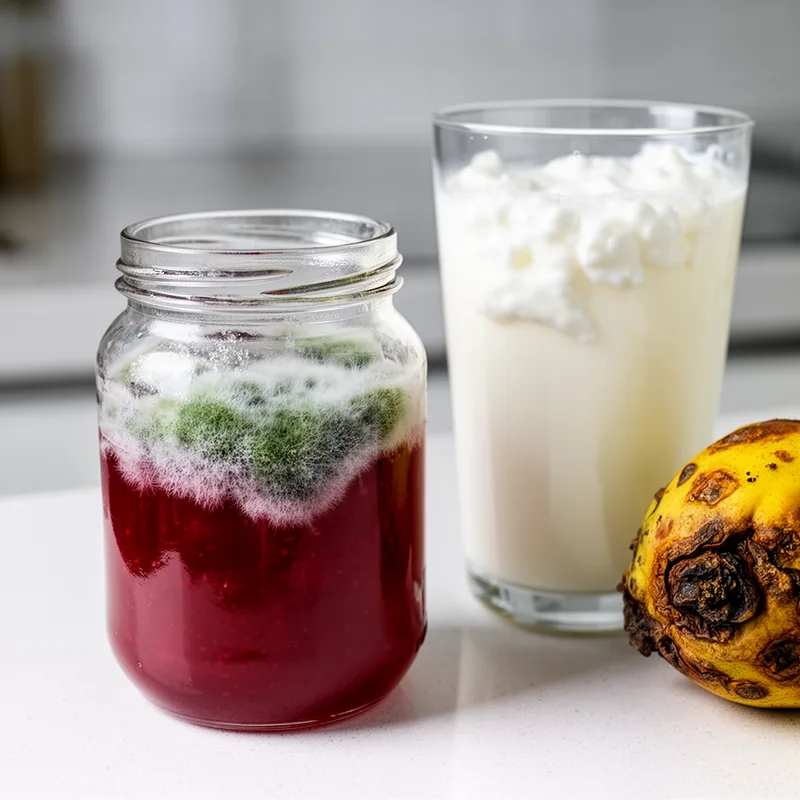
to gone bad
 21
3.2
21
3.2

- phrasal verb
- The milk has gone bad and should be thrown away.
Loading YouTube…
Watch on YouTubeBut fresh fish oil, if it hasn't gone bad, actually shouldn't have any overt fishy flavor.
- But fresh fish oil, if it hasn't gone bad, actually shouldn't have any overt fishy flavor.
- So sadly what has happened is I have half a jar here that has gone bad.
- Well, they get drunk on berries of berries, fruits that have gone bad and.
Examples
-
It tastes like grape juice that's gone bad.
-
Has my meat gone bad after all that reprinting?
-
-Whatever this used to be, it's gone bad.
-
This pack must have gone bad.
-
The cotton was picked too late, so it has partly gone bad.
Academic text (2008) -
Their food was being depleted rapidly, she knew; much of it had simply gone bad.
Fiction book (1992) -
The strawberry crop has gone bad this year.
Fiction book (1997) -
So if the dates on our food don't tell us that something's gone bad, what do they tell us?
-
The wine's gone bad.
-
If you do have veggies on the verge of going bad that you can't get to, freeze them!
Blog text (23)
Synonyms
 287
1.0
287
1.0
Spoiled and not safe to eat
 81
1.0
81
1.0
Gone bad and no longer good to eat or use
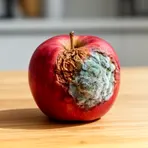 32
2.1
32
2.1
Become unsafe to eat or use because it has spoiled
 30
1.6
30
1.6
To go bad and not be safe to eat
 17
4.1
17
4.1
To become bad or fail, for example a relationship
 1
1.8
1
1.8
Food that is no longer safe to eat because it has gone bad
 1
2.7
1
2.7
No longer fresh and unpleasant to eat


 1
3.9
1
3.9
Something like wood, teeth, or food that is soft and broken because it has rotted
 1
3.1
1
3.1
Badly damaged so it cannot be fixed or returned to how it was before
Turned unpleasant, like milk that went bad or a friendship that ended
Antonyms


How Spoiled

Surface Forms
Morphology
The meaning 'to have become spoiled' is directly derivable from combining 'gone' (here functioning as an inchoative/resultative: 'has gone' = 'has become') with 'bad' (spoiled). The productive English pattern go/gone + adjective meaning 'become X' is common and cross-linguistically transparent, so a B1 learner who knows both constituents can infer the MWE meaning.
Etymology
The phrase gone bad comes from a simple image: something that was good has gone into a bad state, like milk left out that becomes lumpy and smells sour. That's why it means 'spoiled' or 'rotten' and not safe to eat.