
to frog


 1
9.9
- verb
- /frɔg/
- US
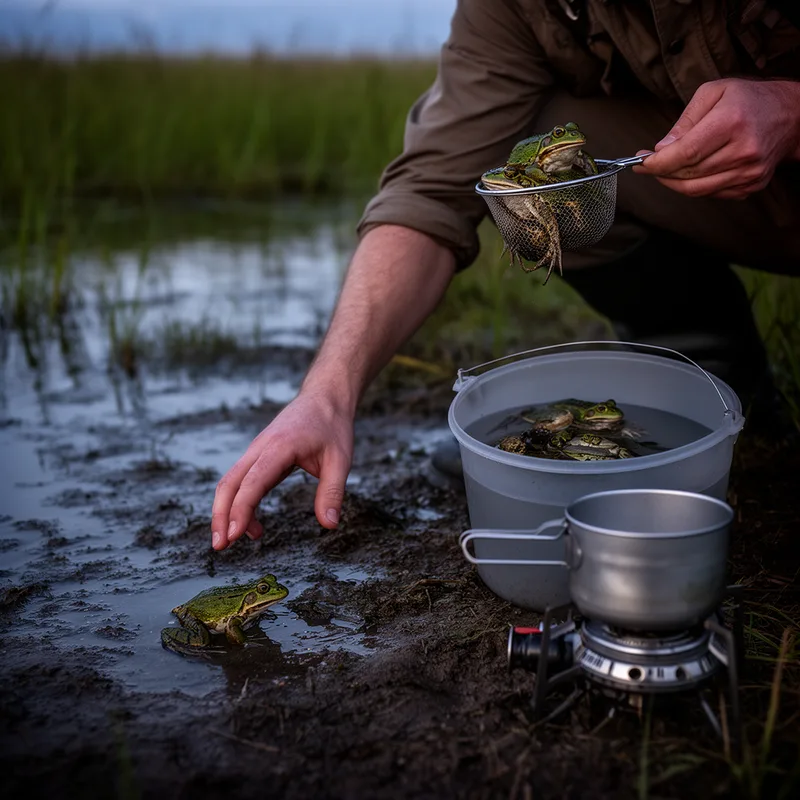
- He took his friends to the lake to go frogging, hoping to bring home enough for a big meal.
Examples
-
During the summer, many people go frogging at night in the wetlands to catch frogs for dinner.
-
Every spring, the locals gather to frog along the riverbank, filling their buckets with fresh catches.
-
His crew was going out doing the frog, getting the stuff and selling.
-
Yeah, well, I'm wearing green, so I'll go frog just because the hat made me think green.
Idioms


- Informal
1
9.3
A person who slowly fails to notice danger until it is too late

Compounds



- Informal
1
9.3
A person or group that does not react to slow harmful changes until serious damage happens

 1
6.7
A water frog from Africa without a tongue that has claws and is often used in labs

- US
1
5.1
A common North American green or brown frog with dark oval spots edged in white


 1
9.3
A small brown frog with dark square spots that lives near ponds and in grassy areas

- Specialized
1
4.9
A small green or brown animal that lives near ponds and wet places and croaks

- US
1
9.8
A small frog from western North America with a tail-like organ in males used to mate

- Specialized
1
3.5
A swimming movement where you pull your knees up, straighten your legs, and push them together like a frog


- Specialized
1
5.6
A smooth-bodied animal that lives in water and on land with long back legs and webbed feet

- South African
1
8.1
A very large frog from central Africa that can grow up to a foot long and weigh about ten pounds

- UK
1
2.7
A common European frog that lives on land and in water and is often green or brown
 1
8.7
A medium-sized frog that lives near streams and mountain meadows in the Cascade Mountains
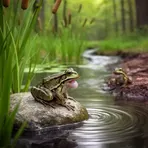
- Specialized
1
7.7
A small frog that lives near ponds and streams in the eastern United States and makes a short clicking call

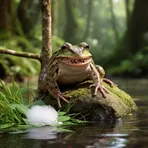
- Specialized
A frog from Central and South America that has teeth and lives on land, in water, or in trees

A land frog that digs and lives underground at night with a hard head

A small frog that jumps, lives near ponds, and makes a high, sharp call in eastern and central United States

- Specialized
A small ground-dwelling frog from tropical America that lives on the forest floor

- Specialized
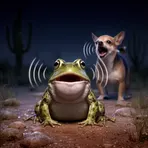
A small frog from the southwestern United States and Mexico that makes a sound like a barking dog
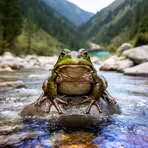
- Specialized
A large Mexican frog that lives near streams and ponds in the mountains

A frog with no tongue that lives mainly in water in Africa, Panama, and northern South America
Surface Forms
Etymology
Frog as a verb meaning 'to hunt frogs' simply comes from the animal name frog — to frog is to go after frogs for food. That is why this verb directly means catching or gathering frogs.