

true frog
- noun
- /tru frɔg/
- Specialized
- The true frog can be identified by its smooth skin and distinctive calls during mating season.
Examples
-
In the pond, we often see true frogs leaping gracefully from lily pad to lily pad.
-
As unusual as circumdiel activity patterns and long periods of surface activity may appear, it strikes us that they might not be uncommon behaviors for frogs, especially for true frogs (Hobson 1967).
Academic text (2010) -
Many species of true frogs thrive in wetlands, making them an essential part of the ecosystem.
Synonyms

A frog with smooth wet skin and strong back legs for swimming and jumping

A large family of frogs found almost worldwide, usually with long legs and smooth skin
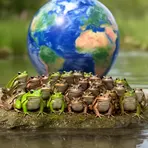
A large group of frogs that live in many parts of the world
Surface Forms
Morphology
The combination 'true' + 'frog' transparently suggests a 'genuine' or prototypical frog, so a B1 learner who knows both words would grasp a general meaning of a real or typical frog. However, the lexicalized usage refers to a specific taxonomic group (family Ranidae), which is specialized knowledge not predictable from the constituents alone, making the term only partially transparent.
Etymology
True frog may come from scientists using true to mean 'real' or 'typical', so they called the classic kind of frog the 'true' one. That's why true frog today means a frog from that group with smooth skin, long legs, and webbed feet.

