

fermentation
 12
3.9
12
3.9

- noun
- /ˌfɜr.mənˈteɪ.ʃən/
- Specialized
- Well, broadly speaking, fermentation is the transformative action of microorganisms.
- anaerobic fermentation
- ethanol fermentation
- fermentation vat
Loading YouTube…
Watch on YouTubeSo yes, spontaneous, spontaneous for fermentation of fruits happens like all the time.
- So yes, spontaneous, spontaneous for fermentation of fruits happens like all the time.
- So, and from a chef's perspective, fermentation is all that flavor.
- So fermentation unlocks the good in something and it can reduce the bad.
- So you mentioned sugars, you mentioned fermentation, so presumably short and long chain fatty acids.
- Now I do want to mention that sprouting or going through a process of fermentation help negate and destroy phytic acid.
- Yes, I have my expert on fermentation sitting near me.
- The reason why we have asked yourself, why would we have the machinery for being drawn to fermentation in first place?
- So for fermentation being the thing that I'm thinking of, would that bacteria not die off?
Examples
-
But the fermentation process itself is bacterial growth, right?
-
The fermentation process occurs when yeast converts sugars into alcohol in the absence of oxygen.
-
Yes, I have my expert on fermentation sitting near me.
-
Insulin is then produced from these bacteria through a fermentation process.
Academic text (1992) -
When the yeasts die, fermentation stops and the alcohol content levels off.
-
Indeed, cows' rumens are really fermentation vats, natural versions of the industrial vats used to produce ethanol.
Academic text (2002) -
The rumen is the largest compartment and serves as a fermentation vat for microbial digestion of grasses.
Academic text (2000) -
To make pisco, producers crush and juice Muscat grapes before fermentation and distillation (historically in a copper still, Figure 2).
Academic text (2011) -
During the fermentation process, bacteria break down carbohydrates to produce lactic acid.
-
Home brewers closely monitor the fermentation of their beer to ensure optimal flavor development.
Synonyms
 2
4.2
2
4.2
A process where tiny living things like yeast turn sugar into alcohol and gas
 1
5.5
1
5.5
A process in which yeast changes sugar into alcohol or acid

A process where yeast or bacteria turn sugar into alcohol without oxygen

A process where enzymes change sugar into alcohol without oxygen, for example in yeast
Compounds
- Specialized
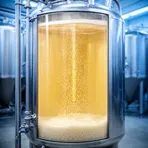
A slow, cold process that makes alcohol in beer where yeast settles to the bottom, used to make lager beers

- Specialized
A liquid made by fermenting sugar that is used in beer, wine, and industry
- Specialized
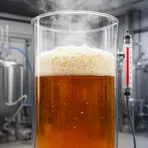
A way of making beer where yeast rises to the top at warm temperatures for ales
How Complete

Surface Forms
Morphology
Etymology
Fermentation comes from the old word ferment, meaning 'leaven', the thing that makes bread rise, and from fervere meaning 'to boil'. Think of bubbling yeast or grape juice changing into alcohol; that 'bubbling' and change is why fermentation now means the chemical process that turns sugars into alcohol and other simpler substances.