
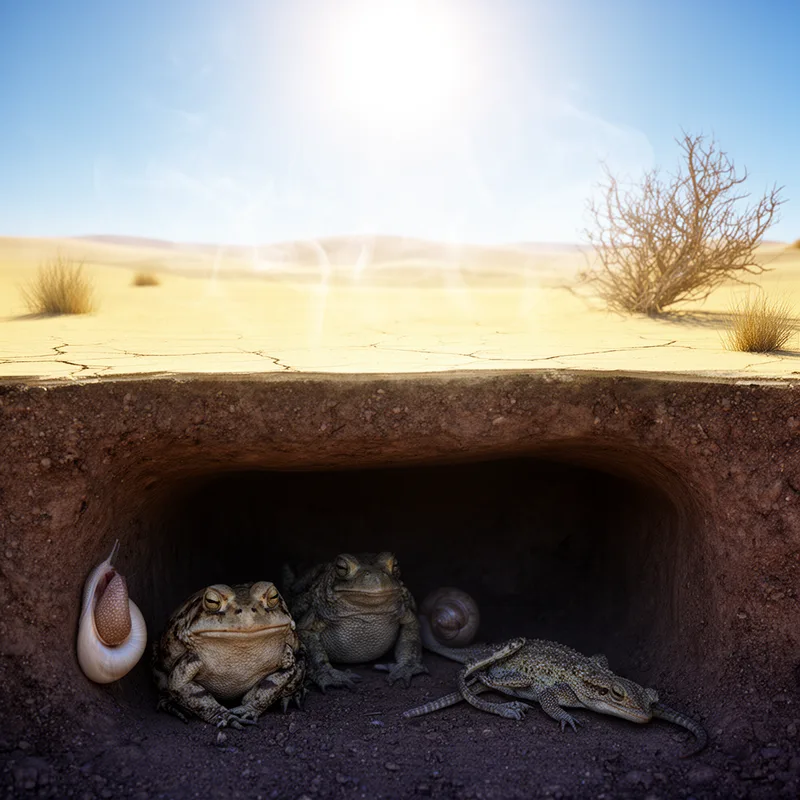
estivation


 1
9.9
- noun
- /ˌɛstəˈveɪʃən/
- Specialized
- In response to the dry climate, many species of reptiles undergo estivation to avoid dehydration and ensure their survival.
Examples
-
Many desert animals rely on estivation to survive extreme heat.
-
The tortoise enters a state of estivation during the hottest months.
-
During severe droughts, some amphibians rely on estivation to conserve water and energy.
-
Many snails enter estivation to survive the hot, dry climate of the desert.
-
The scientist explained how estivation helps certain reptiles survive extreme summer temperatures.
-
During the hot summer months, some animals, like frogs and turtles, enter a state of estivation to conserve energy.
-
To survive the extreme heat, the desert snail can go into estivation, reducing its metabolic processes until conditions improve.
Synonyms
 3
6.2
A time when a plant or animal is inactive and not growing
Antonyms

Surface Forms
Morphology
estivation = estivate (transparent) = estiv + ation
This sense is the straightforward nominalization of 'estivate' (the state or process of estivating), so the meaning follows directly from the base verb plus '-ation'.
Etymology
Estivation comes from the Latin root aestiv- (from aestas) meaning 'summer', and it describes a kind of 'summer sleep' some animals use to survive very hot or dry weather. So, it is like hibernation but for the heat of summer rather than the cold of winter.