
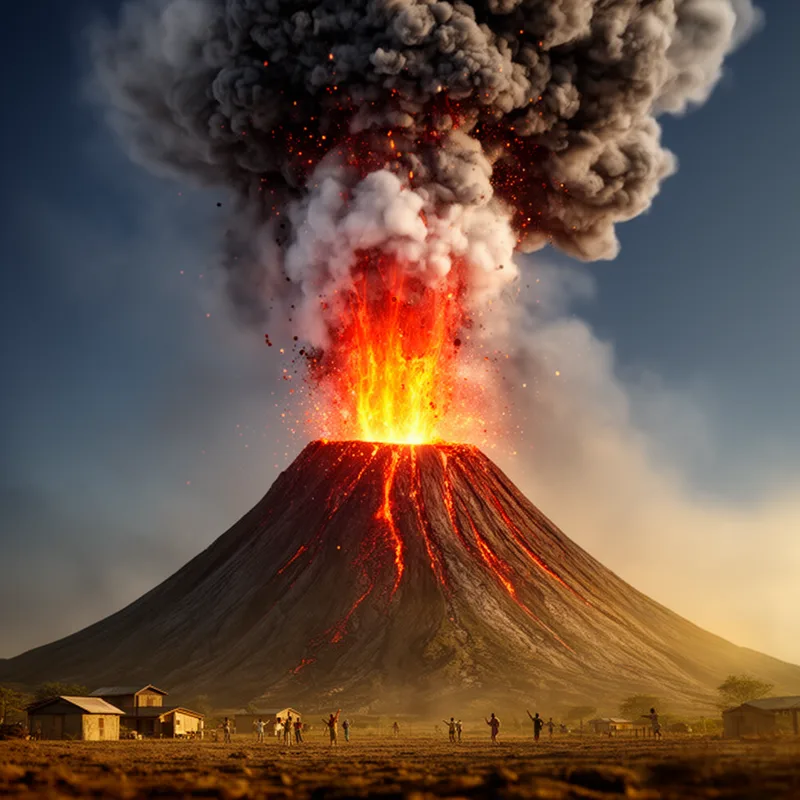
eructation


 1
9.9
1
9.9
- noun
- /ɪˌrʌkˈteɪʃən/
- Specialized
- Scientists monitored the eructation to assess the scale of volcanic activity.
Examples
-
The volcano's eructation sent ash high into the sky.
-
The sudden eructation of ash and lava from the volcano startled the nearby villagers.
-
Each eructation deposited new layers of rock across the surrounding landscape.
-
There were several eructations from Mount St. Helens last summer.
-
The eructation of molten lava from the volcano created a breathtaking display of power.
-
During the eruption, the volcano's loud eructation echoed through the valley.
-
The scientist recorded the eructation as the volcano released ash and gas into the sky.
Synonyms
 73
3.9
73
3.9
A sudden violent burst of lava and ash from a volcano
 14
3.5
14
3.5
A sudden release of hot gas, ash, and melted rock from a volcano
How Forceful

Surface Forms
Morphology
Etymology
Eructation comes from the Latin eructare, where e- means 'out' and ructare means 'to belch'. So a volcano's eructation is like the mountain 'belching' ash and lava out, which explains why it means a strong release during an eruption.