

efferent
- noun
- /ˈɛfərənt/
- Specialized
- The efferents carry signals from the brain to the muscles, enabling movement.
Examples
-
How do we know that they're efferents versus afferents?
-
One potential protective mechanism is activation of the medial cochlear efferents.
Academic text (1998) -
Further experiments analyzing the functional role the efferents may play during sound conditioning will be needed.
Academic text (1998) -
You find that there is a huge difference in the two ears where the efferents or these olivo cochlear neurons have been cut.
-
The resultant erosion of myelin sheaths and the "crosstalk" between the cochlear efferent and afferent nerves can produce tinnitus.
Academic text (1995) -
The body relies on efferents to transmit commands for voluntary actions.
-
In experiments, researchers observed how efferents control various bodily functions.
Synonyms



 1
4.5
1
4.5
A body part that sends messages from the brain and spine to make muscles move or glands work
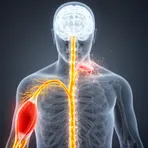
A nerve that sends signals from the brain and spinal cord to muscles or glands
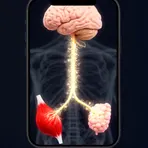
A nerve that carries signals from the brain or spinal cord to muscles and glands
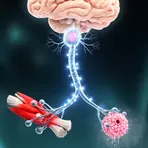
Nerve cell that carries signals from the brain or spinal cord to muscles and glands
Antonyms

Compounds
- Specialized
A nerve that carries signals from the brain or spinal cord to muscles and glands
- Specialized
A nerve that sends signals from the brain and spinal cord to muscles or glands
- Specialized
Nerve cell that carries signals from the brain or spinal cord to muscles and glands
Surface Forms
Morphology
efferent = ef + fer + ent
Formed from Latin combining elements (ef- + fer + -ent) that are not recognizable as standalone English words to an average B1 learner, and the term is technical.
Etymology
Efferent comes from the Latin parts ex- meaning 'out' and ferre meaning 'to carry'. You can see the same 'carry' root in transfer, which helps you remember that an efferent nerve or vessel carries signals or substances away from the brain or spinal cord.