
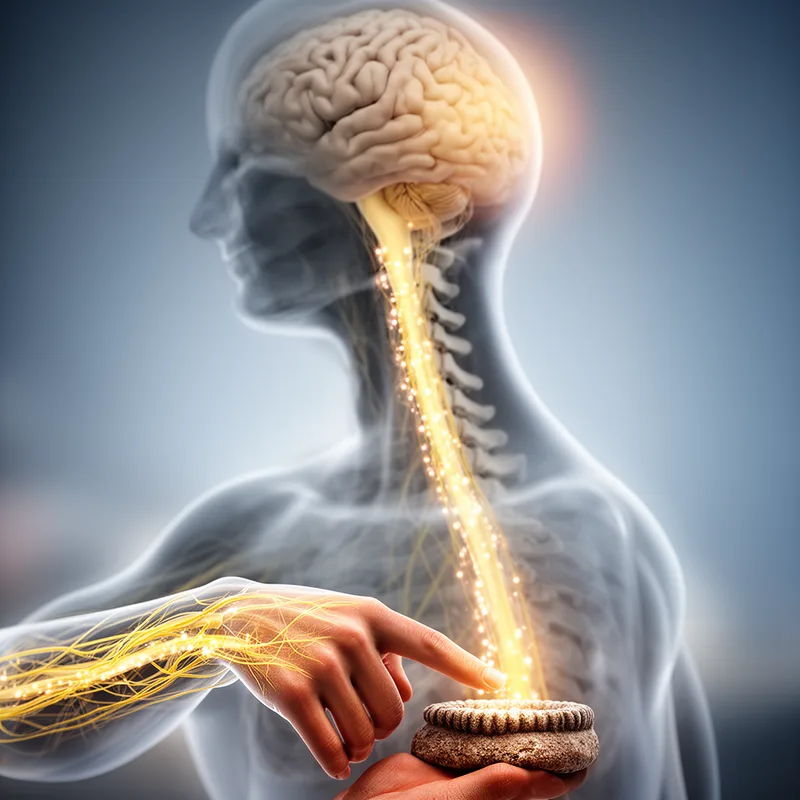
afferent
 1
8.9
1
8.9

- adjective
- /ˈæfərənt/
- Specialized
- Afferent and efferent nerve pathways move into and out of the spinal cord.
- afferent nerve
- afferent fibers
- afferent input
Examples
-
Type I hair cells are flask-shaped and connected to a single large afferent nerve fiber.
Academic text (2005) -
There is some evidence to suggest that this afferent information influences the activation balance of the muscles in the injured area.
Academic text (1997) -
And I do know the difference between afferent and efferent.
Fiction book (1994) -
I hope that you are finally clear on the difference between afferent and efferent nerves.
Fiction book (1994) -
The left eye also exhibited a large central scotoma, dyschromatopsia, and a left afferent pupillary defect.
Academic text (2005) -
Attention has been focused on the role of opioid receptors in peripheral terminals of primary afferent neurons.
Academic text (1996) -
Outer hair cells synapsing on afferent nerve fibers contribute to the auditory nerve and innervate the cochlear nuclei.
Academic text (1998) -
The afferent nerves transmit sensory information from the skin to the brain.
-
In the human body, afferent impulses carry signals from the eyes to the central nervous system.
-
Doctors study afferent pathways to understand how sensory inputs affect our reactions.
Synonyms
 6
3.9
6
3.9
Carrying signals from the skin and sense organs to the brain and spinal cord
 1
8.5
1
8.5
Carrying sensory signals from the body to the brain or spinal cord
Antonyms


Compounds

- Specialized
A long thin part of a nerve that carries signals to the brain and spinal cord
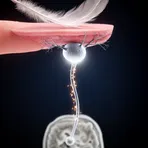
- Specialized
A nerve cell that carries sensory signals to the brain or spinal cord

- Specialized
A nerve that carries signals from parts that feel, like the skin, to the brain or spinal cord
Surface Forms
Morphology
afferent = af + fer + ent
Although analyzable as af- (assimilation of ad-) + fer + -ent, these Latin combining forms are not productive English morphemes and a typical learner cannot derive the meaning from familiar English words.
Etymology
Afferent comes from Latin ad- 'to' and ferre 'to carry'. So when a pathway is afferent, it is 'carrying to' the brain and spinal cord — in other words, it brings sensory signals toward the body's control center.