
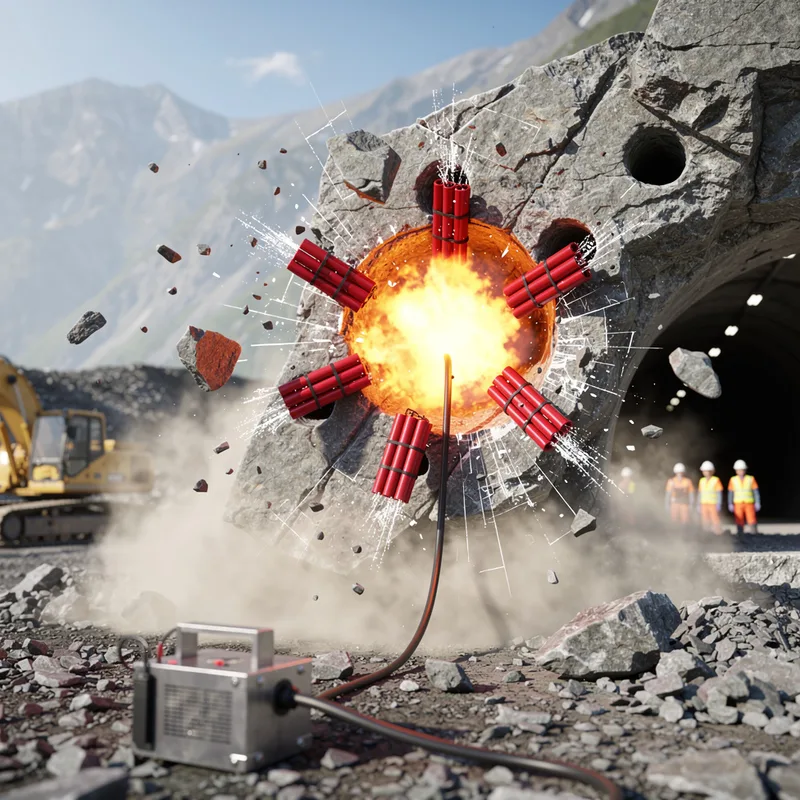
to dynamite
 6
5.1
6
5.1

- verb
- /ˈdaɪnəˌmaɪt/
- Then they dynamited a few homes, and the people knew they'd better leave.
- dynamited buildings
- dynamite the levees
- dynamite the mountain
Examples
-
They'll need to dynamite channels through any pesky coral reefs that get in the way.
Blog text (19) -
They're gonna dynamite this door.
-
My enemies plan to dynamite this place some night.
-
Because I'm gonna dynamite the train.
-
Engineers could dynamite obstacles in water up to two feet deep.
Academic text (1994) -
How can we shut the mines down if we don't dynamite them?
-
The bankstas have dynamited the dam, and water is rushing down the valley.
Blog text (21) -
As early as 1981, RENAMO forces had dynamited pylons near Espungabera, reducing electricity exports by 50 percent.
Academic text (2005) -
The construction crew had to dynamite the boulders blocking the road before they could proceed.
-
To clear the rubble from the explosion, they decided to dynamite the remains of the old building.
Synonyms
 579
2.8
579
2.8
To burst suddenly and violently, making a loud noise and flying pieces
 534
2.7
534
2.7
To cause something to explode violently
 300
3.1
300
3.1
To attack a place by dropping explosive devices from planes
 192
6.5
192
6.5
Cause something like a bomb or firework to explode suddenly and violently
 57
3.2
57
3.2
Make a building or wall fall down suddenly
 33
7.7
33
7.7
To destroy something completely as if by a powerful weapon
 32
7.4
32
7.4
To destroy something completely, often using a nuclear bomb
 2
9.1
2
9.1
To attack a place with a thick burning liquid from bombs or flamethrowers
 1
9.2
1
9.2
To destroy a place with very powerful weapons like bombs
Antonyms


Idioms

Compounds


How Destructive

Surface Forms
Etymology
Dynamite (verb) comes from the same root dynam-, seen in dynamic, meaning 'power' or 'force', so to dynamite something is to 'use a strong force' to blow it up.