

to distend
 12
8.2
12
8.2

- verb
- /dɪˈstɛnd/
- The coroner's report says that he had a distended rectum.
- distended neck veins
- distended neck
- distended abdomen
Loading YouTube…
Watch on YouTubeHe glowered at her, his face red, veins in his forehead became distended.
- He glowered at her, his face red, veins in his forehead became distended.
- So I do stuff and it as I got richer and my bars got deeper and my testicles started to distend with age, I discovered that testicles float.
- And so maybe counterintuitively, it will be bigger spatially, it will distend, it will bloat, although it'll be redder, it'll be cooler.
Examples
-
And yet the main arteries were distended several inches.
-
If he'd eaten anything, his stomach would be distended by now.
-
Hold his wrist to distend the vein so I can find it.
-
I think McKenna's got a distended knee.
-
They force-feed the goose so its liver distends.
-
The girl tried not to stare at their distended bellies, swollen and tight as wineskins.
Fiction book (1990) -
A: At presentation, the tumor distends the lateral border of the tongue and extrudes through the mucosa.
Academic text (2006) -
The kegs are specialized ants with hugely distended stomachs, which spray liquid into the aphids.
Fiction book (1998) -
The Dundaga mornings turned into creatures with chapped lips, empty eyes, and bellies distended with want.
Fiction book (1998) -
The dog began to distend its belly after eating too much food.
Synonyms
 117
3.2
117
3.2
To become larger often by pressure or by soaking in water
 44
2.9
44
2.9
To fill something with air so it becomes larger and round
 35
6.1
35
6.1
To become wider or more open, as when pupils open in the dark
 28
3.9
28
3.9
Become larger and rounder because of liquid, injury, or illness
 19
4.9
19
4.9
To become swollen because of gas or fluid
 7
2.9
7
2.9
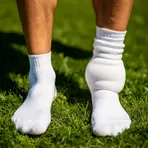
To swell so that part of something sticks out
 7
2.7
7
2.7
To swell or become larger suddenly
 5
3.5
5
3.5
To make something larger by filling with air or pride
 3
3.7
3
3.7
To stick out in a round shape, like a pocket or balloon
 2
4.4
2
4.4
To make something larger or more full, for example by filling it with air
 1
5.4
1
5.4
To stick out or swell in a visible way

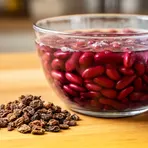
To swell and become larger when heated or when it soaks up water

To stick out in a round shape, like a jacket or sail in the wind

To stick out from a surface like a bump
Antonyms


How Swollen

Surface Forms
Morphology
Etymology
Distend comes from the Latin parts dis- ('apart') and tendere ('to stretch'), the same root you see in extend and tension. So to distend is to swell or stretch outward from inside, like a balloon or a full stomach.