

to distance
 3
6.2
3
6.2

- verb
- /ˈdɪstəns/
- But the Cyprus adventure backfired and prompted Washington to distance itself from the regime.
Examples
-
The United States, whose policymakers were encouraging a democratic government, began to distance itself.
Academic text (1990) -
The champion swimmer sought to distance herself from her competitors right from the start.
-
We can distance them, but they can distance us, right?
-
This morning he out-distanced me beautifully.
-
Modern American society has tried to distance itself from end-of-life fretfulness.
Academic text (2015) -
The cyclist managed to distance herself from the group, ensuring an easy victory.
-
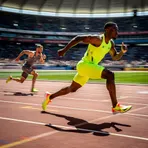
In the final lap, he distanced the other runners with a strong burst of speed.
Synonyms
 83
3.4
83
3.4
Do better than others, for example at work or school
 20
4.9
20
4.9
To move, grow, or develop faster than another
 7
6.8
7
6.8
To become faster, better, or larger than another
 2
6.7
2
6.7
Get much farther ahead of other people in a race or competition
 1
5.9
1
5.9
To get ahead of others in progress or achievement


 1
4.6
1
4.6
To move ahead of others in a race or competition
Antonyms

Idioms


Phrasal Verbs



Compounds






- Specialized
1
8.5
Average of the farthest and nearest distances of a planet or satellite from the body it orbits


- Specialized
1
9.9
The shortest distance from a radio transmitter where radio waves bounced by the ionosphere can be picked up

- Specialized
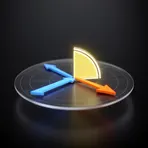
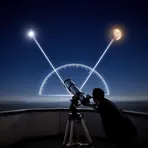
The angle between two objects as seen from one place, measured in degrees

- Specialized
The distance from a lens or mirror to the point where parallel light rays meet

- Specialized
Distance from the camera lens to the nearest point that looks sharp when the lens is focused very far away
How Far

Surface Forms
Etymology
The verb distance comes from Latin distare 'to stand apart', and it keeps that idea of space. So to distance a competitor is to make space between you and them, like a runner who pulls ahead.