
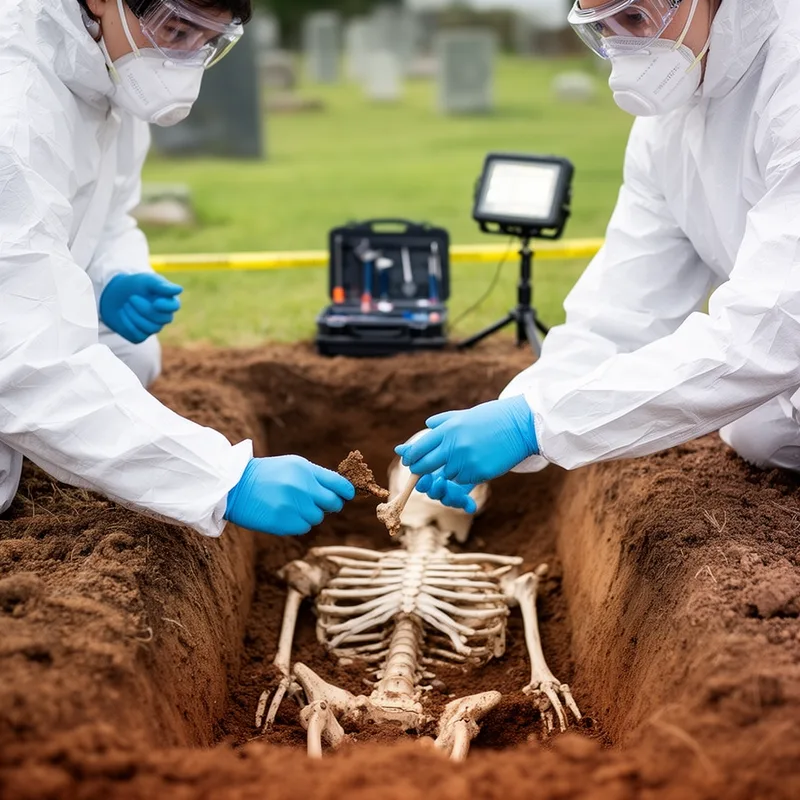
to disinter
 1
9.5
1
9.5

- verb
- /ˌdɪsɪnˈtɜr/
- After years of debate, the family agreed to disinter their ancestor's remains for the historical research.
Examples
-
Bodies were supposedly moved from the 1860s to the 1880s, but with only 10 men working to disinter the deceased, it's not physically possible that all plots were evacuated.
Blog text (27) -
Samia's research aims were both nationalist and leftist: to disinter a significant moment of a buried Palestinian past and to give voice to the people's view of the revolt.
Academic text (1990) -
"Can nothing be done to disinter this human soul?
-
The lawyer acknowledged it was highly unlikely his clients would seek to disinter.
Blog text (19) -
The Bamana consider albinos so powerful that they will even attempt to disinter them after death.
Academic text (2008) -
Only two witnesses claimed to have seen the defendants disinter a corpse, and they only testified about six of the accused.
Academic text (2004) -
She says the government strongly encourages families to disinter their loved ones and reinter them in the mass graves, even if the family members would prefer not to.
Academic text (2010) -
The authorities decided to disinter the old grave to collect evidence for the investigation.
-
A team of archaeologists was permitted to disinter the burial site to study ancient burial practices.
Synonyms
 34
8.1
34
8.1
To dig up a body from the ground for checking or burying again
 28
5.8
28
5.8
To dig in the ground to find or remove old objects, often by archaeologists
 5
8.6
5
8.6
Dig up a buried body to examine it
Antonyms


How Formal

Surface Forms
Morphology
Etymology
The word disinter is made of dis- meaning 'reverse' and inter meaning 'to bury', so it literally means 'undo burying' and that's why disinter means to dig up and remove a buried body or object.