
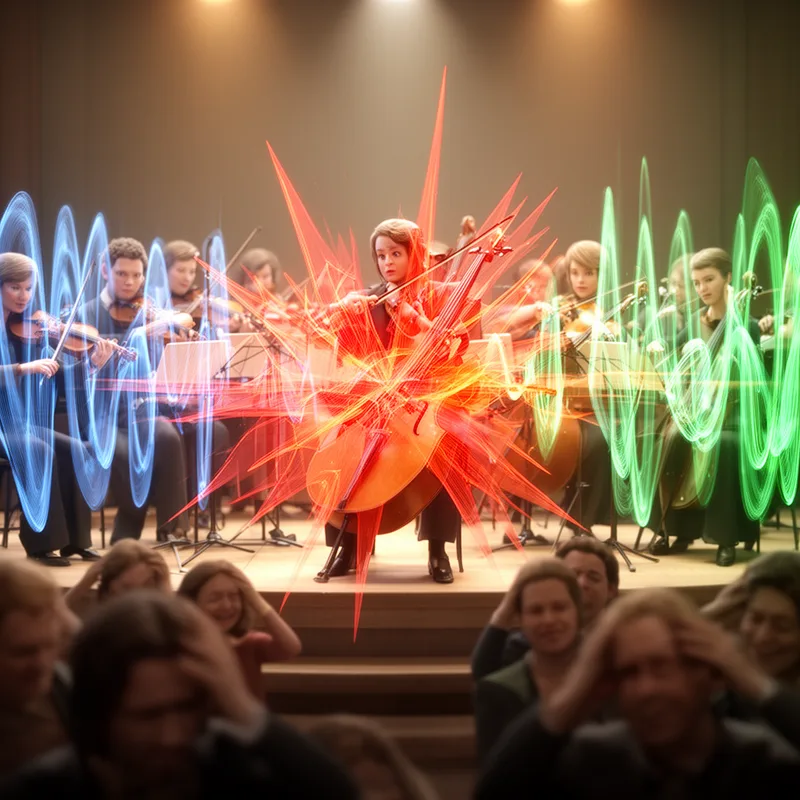
disharmonic
- adjective
- /dɪsˈhɑːrmənɪk/
- Some modern composers use disharmonic sounds to create tension in their music.
Examples
-
The disharmonic tones of the orchestra made the audience uncomfortable.
-
The disharmonic notes clashed, making the song difficult to listen to.
-
The orchestra played a disharmonic passage that made the audience uneasy.
-
Can you hear that disharmonic sound coming from the speakers?
-
The disharmonic sounds from the orchestra made the audience cringe.
-
Her disharmonic singing stood out in the otherwise beautiful choir.
-
The disharmonic chords created a tension that was unsettling.
Synonyms

 20
6.1
20
6.1

A loud, harsh sound that feels unpleasant and surprising
 2
8.4
2
8.4
Making a loud, harsh noise that is unpleasant to hear


 1
7.8
1
7.8
Not fitting together, like clashing sounds or colors
 1
9.3
1
9.3
Has a loud, harsh sound that is unpleasant

Not having a pleasant, musical sound
Antonyms


How Discordant

Surface Forms
Morphology
disharmonic = harmonic (transparent) = dis + harmon + ic
The prefix 'dis-' straightforwardly negates or reverses the positive sense of 'harmonic', yielding 'not harmonic' or 'lacking harmony'.
Etymology
Disharmonic comes from the parts dis- meaning 'not' and harmonic, the same root as harmony and harmonious. So it means 'not in harmony', which is easy to picture when musical notes clash and make a harsh, unpleasant sound.