

to depress
 10
4.8
10
4.8

- verb
- /dɪˈprɛs/
- Unstable political conditions are also likely to boost risk estimates and depress the value of Polish industrial enterprises.
- depress prices
- depress wages
- depress income
Loading YouTube…
Watch on YouTubeAnd So what happens is they depress their emotions.
- And So what happens is they depress their emotions.
- He was also able to buy into some of the oil properties at times when oil prices were depressed.
- But in essence, do you do something that depresses views for some people in a, in a feed that should be chronological?
Examples
-
Curbs on home heating and lighting depress workforce capability; hence, the energy crisis continues.
Academic text (2004) -
Increased production without corresponding demand can depress market prices significantly.
-
The board's using him to depress the stock to buy it cheap.
-
For the other school assessments, creativity did not add to performance and even appeared to depress results.
Academic text (1991) -
Budgets often remain low; however, because with an enormous pool of cheap talent, companies can depress wages.
Academic text (2017) -
More tangibly, they probably have helped depress the achievement and mobility potential of the group's young.
Academic text (1996) -
We know that work outside the home both delays and depresses childbearing.
Academic text (1993) -
External sanctions, in turn, would aggravate anxiety among investors, further depressing Venezuela's economy.
Academic text (2001) -
New sawmills were banned in 1987, which meant less competition among buyers, depressing incomes for suppliers.
Academic text (2002) -
The mining of shale gas in the United States freed up LNG shipments to Europe, depressing prices.
Academic text (2011)
Synonyms
 802
1.0
802
1.0
Make something go down in position, amount, or strength
 162
2.1
162
2.1
To make something weaker or in a worse state
 89
3.0
89
3.0
Make an amount or level lower
 23
6.8
23
6.8
To become less strong or severe and to make something do the same
 5
5.1
5
5.1
To make prices or economic activity go down
How Low

Surface Forms
Morphology
Etymology
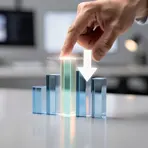
Depress comes from the parts de- 'down' and press 'to push'. So to depress prices or activity is to 'push them down', which is why it means to make things fall or become lower.