
depreciation
 15
6.3
15
6.3

- noun
- /dɪˌpriːʃiˈeɪʃən/
- Specialized
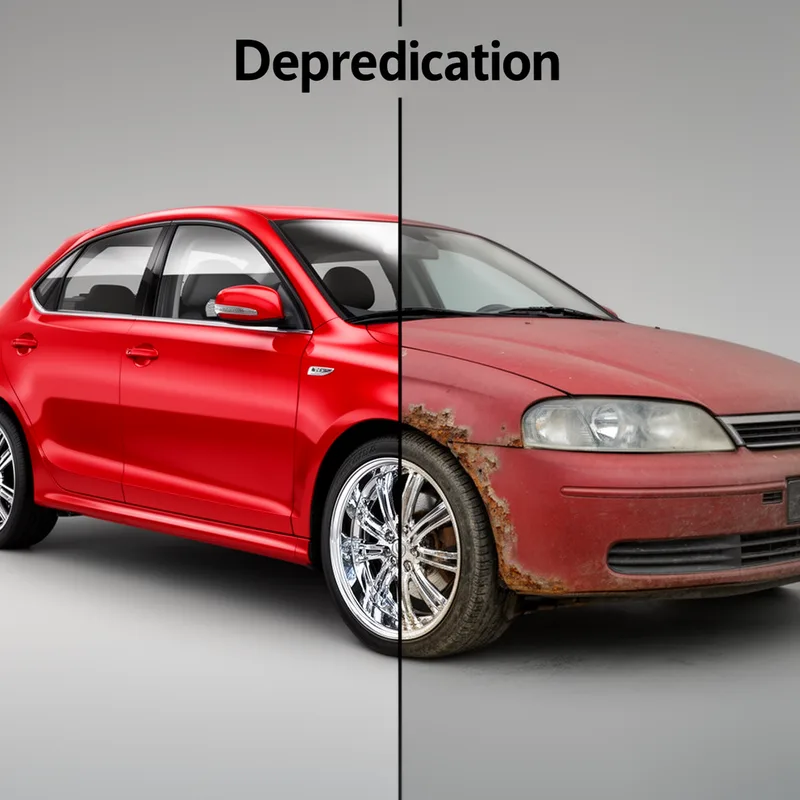
- The depreciation of the car's value became evident after just a few years of use.
- depreciation and amortization
- depreciation deduction
- tax depreciation
Loading YouTube…
Watch on YouTubeSo here we have a couple exceptions to your depreciation deduction.
- So here we have a couple exceptions to your depreciation deduction.
- And a cost segregation analysis allows you to take a bunch of depreciation in your first year.
- Now the one thing that you subtract in the cost basis calculation will be the depreciation that you've claimed.
- But with Airbnb, you get to hold the property, you get all the long term benefits like depreciation, appreciation, you know, cash flow.
- Another thing, this is the main reason why people buy rental properties and that is for depreciation.
- So you're making passive income, cash flow and you're writing off against the cash flow, a depreciation on your property.
- Well, this just says that this economy and this economy there is more investment than destruction of capital due to depreciation, OK?
- A big reason for this depreciation is the constant price cuts that manufacturers have made to new cars.
- So what we're going to see is do I want you to say is just this deceleration of appreciation is not the same thing as depreciation.
- And less risk in a growth city because not only do you have that further upside of appreciation, but you don't face as much risk of potential depreciation.
- It's leverage and depreciation that you lose in the Roth IRA.
Examples
-
In economics, George Horwich introduced the idea that disasters can lead to an "accelerated depreciation" of outmoded capital stock.
Academic text (2013) -
So what is the cash after expenses, before depreciation that you guys have coming in to work with?
-
The second is the depreciation asset value of that asset.
-
So increasing the level of accelerated depreciation is going to raise the level of investment.
-
In addition to the operator cost and machine depreciation, the cost of raw materials used must also be considered.
Academic text (1996) -
Over the study period, natural resource depreciation increased at an average rate of 6.4 percent a year.
Academic text (1992) -
A big reason for this depreciation is the constant price cuts that manufacturers have made to new cars.
-
And a cost segregation analysis allows you to take a bunch of depreciation in your first year.
-
So because it's three years old, two to three years old, it's already lower on its depreciation curve and that curve is flattening out.
-
A huge issue for early EV adopters has been the extreme depreciation that they've experienced with their cars.
Synonyms
 439
3.9
439
3.9
A gradual loss in amount, quality, or value
 43
5.9
43
5.9
A slow change when something like a building or a person's health becomes worse
 29
4.2
29
4.2
A slow loss of strength, value, or trust
 17
3.0
17
3.0
Slow damage that happens to things like cars or furniture from normal use over time
 8
7.5
8
7.5
A process of becoming worse in condition, quality, or morals
 5
7.2
5
7.2
To reduce a debt or an asset's value little by little with regular payments
 1
3.9
1
3.9
A fall in how good something is over time

A loss in worth or importance
Compounds


 1
7.3
1
7.3
Profit a company makes before interest, taxes, depreciation and amortization

- Specialized
An amount taken off profit for tax because a business asset loses value over time

- Specialized
An amount companies record each year as an expense to show equipment loses value
- Specialized
A measure of how quickly things like cars or machines lose value over time, often used for tax

- Specialized
The percentage by which property or equipment loses value over a period for accounting


- Specialized
An amount a business subtracts from taxes each year for a machine or building

- Specialized
A way of charging the same cost each year for an asset that loses value
How Depreciated

Surface Forms
Morphology
depreciation = depreciate (semi-transparent) = de + preci + ate + ion
For learners who know the verb 'depreciate', adding '-ion' straightforwardly forms the noun for the process or result.
Etymology
Depreciation comes from de- 'down' and the same root as price, meaning 'price' or 'value'. So it literally means a 'fall in price', which is why we use it for an asset losing value over time.