

deionization


 1
7.1
1
7.1
- noun
- /ˌdiːaɪˌoʊnaɪˈzeɪʃən/
- Specialized
- Industrial plants often use deionization to ensure their water supply is free of impurities.
Examples
-
After deionization, the water can be safely used in sensitive electronic manufacturing.
-
The deionization process is crucial for producing pure water.
-
The deionization of water is essential for many laboratory experiments.
-
We use deionization to remove impurities from the water.
-
The laboratory uses deionization to purify the water for experiments.
-
After deionization, the water was clear and free of impurities.
-
They achieved high-quality results by applying deionization to the solution.
Synonyms
 15
4.6
15
4.6
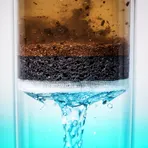
Making something clean by removing unwanted or harmful substances
 5
5.6
5
5.6
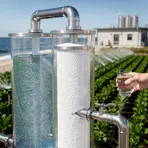
Removing salt from seawater to make it safe to drink or to water crops
 3
6.3
3
6.3
Removing unwanted things or substances from something by cleaning
 3
6.3
3
6.3
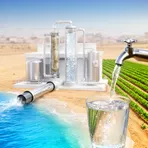
The process of removing salt from sea water so people can drink or farm with it
 1
7.5
1
7.5
The removal of minerals and salts from water or other liquids
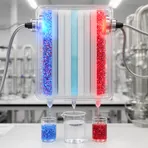
A process that uses electric current and membranes to remove salts from water

Removing salt from water so it is safe to drink

The process of removing harmful substances to make food or water safe
How Pure

Surface Forms
Morphology
Etymology
The word deionization uses de- 'remove', as in dehydrate, and ion 'a charged particle', so it means 'taking ions out'. That's why deionization is used to make water pure by removing dissolved salts and minerals.