
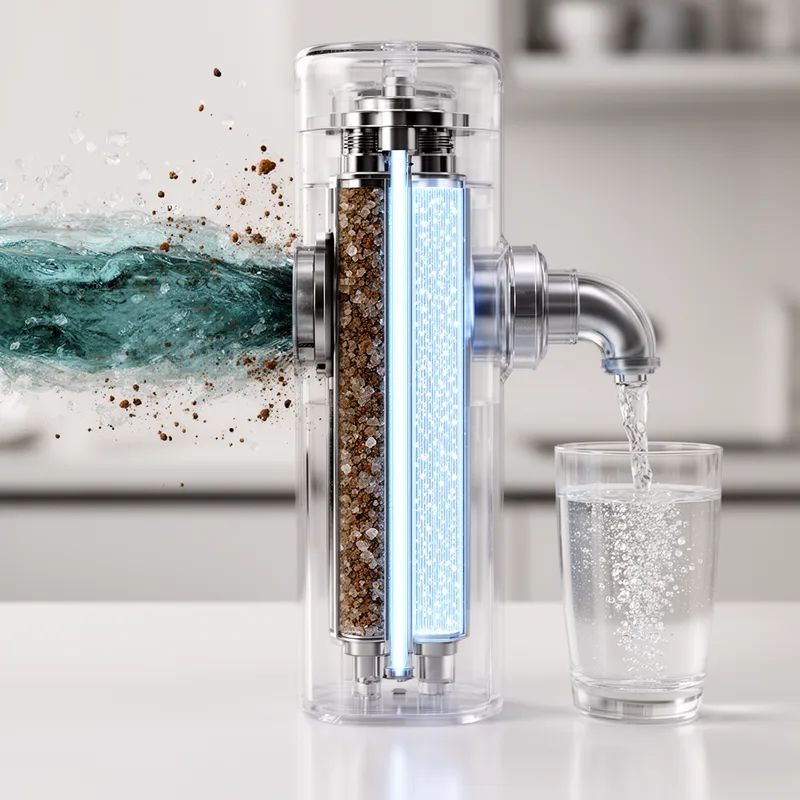
reverse osmosis
 1
4.5
1
4.5

- noun
- /rɪˈvɜrs ˌɑsˈmoʊsɪs/
- Specialized
- The technology most frequently referred to when talking about membrane desalination is reverse osmosis.
- reverse osmosis membrane
- reverse osmosis system
- reverse osmosis plant
Loading YouTube…
Watch on YouTubeNothing, Nobody drinks a drop of water or cooks with a drop of water in this house that doesn't go through the reverse osmosis filtration system.
- Nothing, Nobody drinks a drop of water or cooks with a drop of water in this house that doesn't go through the reverse osmosis filtration system.
- For me it is the Brio Prism Reverse Osmosis tankless water filtration system.
- You have to do like reverse osmosis to get it back.
- You would have to have like reverse osmosis filter that maybe re mineralizes the water.
Examples
-
The reverse osmosis system installed in our home removes contaminants from drinking water.
-
Both plan to employ reverse osmosis, a membrane-technology filtration process also used to clean brackish groundwater.
Blog text (25) -
But when we owned our home in Hawaii, we installed a reverse osmosis system.
Blog text (16) -
You can get rid of all the forever chemicals if you have a reverse osmosis filter.
-
And reverse osmosis is the overwhelming choice when it comes to desalination methods.
Academic text (2004) -
Probably the best-known of these processes is reverse osmosis (RO).
Academic text (2003) -
Aqua True Purifiers use a four stage reverse osmosis purification process, and their countertop purifiers work with no installation or plug.
-
Reverse osmosis is commonly used in aquariums to provide fish with clean and safe water.
-
Many industries rely on reverse osmosis to purify water for their production processes.
How Effective

Surface Forms
Morphology
The meaning is directly compositional: 'reverse' (to make opposite) applied to 'osmosis' (the process of solvent passing through a membrane) yields the process that reverses normal osmosis, i.e., forcing solvent the other way typically by applying pressure. Although the term is technical, its semantics follow transparent combination of the constituents and would be inferable by a learner who knows both words.
Etymology
The noun reverse osmosis describes forcing water the opposite way to how it would move by osmosis, with reverse motion pushing the water through a thin filter that only lets water pass and leaves salt and dirt behind. Imagine pushing seawater through a fine wall so clean water comes out, which is why it means 'a process to purify water'.