
deionization
- noun
- /ˌdiːaɪˌɒnɪˈzeɪʃən/
- Specialized
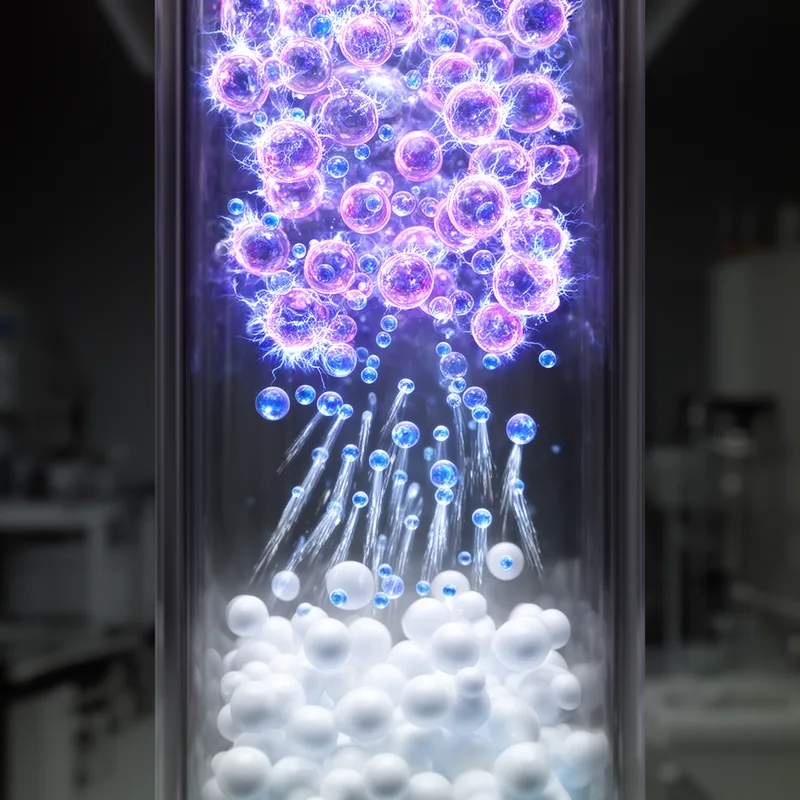
- Scientists observed rapid deionization as the plasma cooled and neutral atoms formed.
Examples
-
The deionization of the gas was necessary to restore its original chemical properties.
-
We need to study deionization methods for better results.
-
Water purification systems often use deionization to remove dissolved salts and minerals.
-
The process of deionization is crucial for water purification.
-
The deionization of the gas was necessary to restore its original chemical properties.
-
Water purification systems often use deionization to remove dissolved salts and minerals.
-
Scientists observed rapid deionization as the plasma cooled and neutral atoms formed.
Synonyms

 11
6.1
11
6.1

When an atom or charged atom gains electrons, often by gaining hydrogen
Surface Forms
Morphology
Etymology
The word deionization comes from the prefix de- meaning 'remove' and ion meaning 'a charged atom or molecule', so it literally means 'removing charge'. That's why deionization describes when a gas or plasma cools and its atoms gain back electrons and become 'not charged'.