
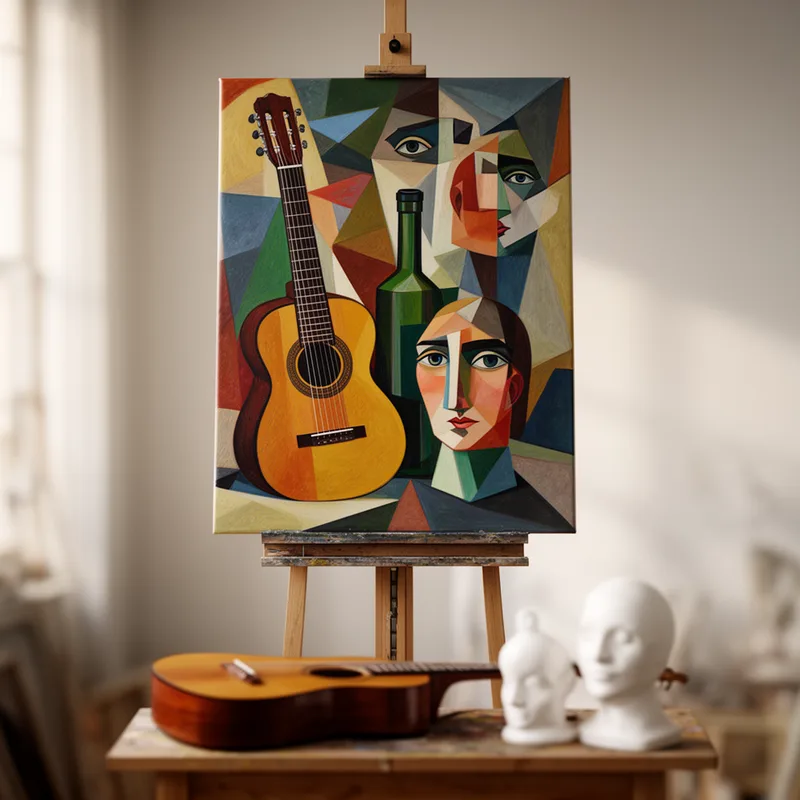
cubistic
 1
9.1
1
9.1

- adjective
- /kjuːˈbɪstɪk/
- Thus, in this shifting play of cubistic and linear narratives, Pasternak has presented in distilled form the opposing forces of classical tradition and futurist theory.
Examples
-
Suddenly, cubistic creatures appeared and disappeared as Colene and Provos hastily stepped into the next reality.
Fiction book (1992) -
These cubistic representations end only when Patrik moves to the Gromekos' (Proza 300; Short Stories 185).
Academic text (1999) -
The visual effect is perhaps less cinematic than cubistic; thematically, these portraits mark the point at which the doubling, fissuring, and dismemberment to which the human face is subjected reaches its greatest intensity.
Academic text (2003) -
I was a bit overenthusiastic, succumbing to my suppressed artistic drives, I sculpted, in living flesh, on the face of little Bernie Schwartz the world's first cubistic nose.
-
The artist's latest work features a cubistic approach, with geometric shapes and overlapping perspectives.
-
Many of Picasso's paintings are recognized for their cubistic style, showcasing fragmented forms and multiple viewpoints.
-
In this gallery, several cubistic artworks demonstrate how geometry can express complex emotions.
Synonyms
 2
7.4
2
7.4
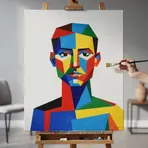
A style of art that uses flat, broken shapes like cubes
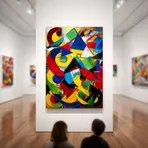
Relating to art that uses shapes and colors rather than real people or things
How Cubist
1
9.1

- Specialized

 1
8.9
35
7.1
11
5.9
65
4.1
1
8.9
35
7.1
11
5.9
65
4.1
Surface Forms
Morphology
Etymology
The word cubistic comes from the familiar word cube, a simple three-dimensional shape, and the ending -istic meaning 'relating to'. A helpful image is artists like Picasso breaking objects into flat parts and showing many sides at once, like looking at a cube from different angles, so cubistic means 'in the style of cubism'.