
cosine
 3
6.7
3
6.7

- noun
- /ˈkoʊsaɪn/
- Specialized
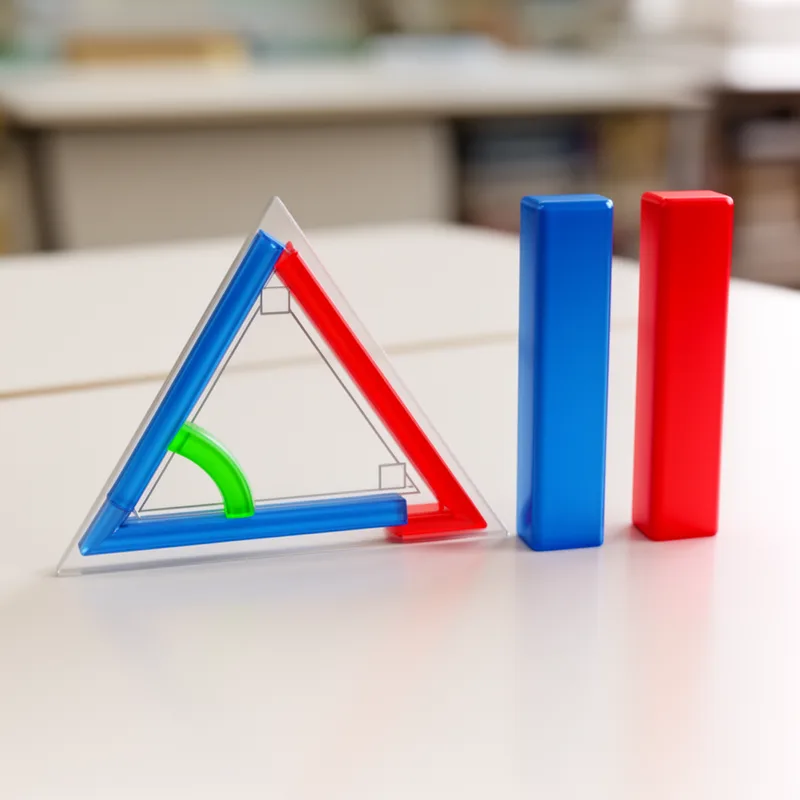
- In a right-angled triangle, the length of the side adjacent to the angle divided by the hypotenuse gives the cosine of that angle.
- sine and cosine
- cosine function
- cosine transform
Loading YouTube…
Watch on YouTubeThese two coordinate values also give you your cosine and sine.
- These two coordinate values also give you your cosine and sine.
- And then the question might be find sine of Theta, cosine of Theta, and tangent of Theta.
- This distance is what cosine of an angle Theta.
Examples
-
To convert aspect to a continuous linear data set, we calculated the cosine of the aspect multiplied by -100 to produce values ranging from -100 to 100.
Academic text (2009) -
VI dot VJ is exactly cosine Theta, OK.
-
And then this one might be cosine of five, right?
-
And we promise not to judge if you try to find the cosine of 'x' for any of the
Blog text (13) -
As I was saying, the cosine of an angle is defined ...
Fiction book (2000) -
We could write that as cosine of X over sine of X.
-
The angle between the lines, or the cosine of the angle between the lines, approximates the correlation between the variables they represent.
Academic text (2016) -
Definitions and use of basic trig functions: sine, cosine, tangent
Academic text (1998) -
The sine and cosine functions jointly describe both the amplitude and phase angle of any periodic changes that trace the phase of the moon.
Academic text (1995) -
The two relationships that are used most frequently are the sine rule and the cosine rule (Bostock, L. and Chandler, S., 2000).
Blog text (29)
Synonyms


 1
6.3
1
6.3
The ratio of the side next to an angle to the longest side in a right triangle
Compounds



Surface Forms
Etymology
Cosine comes from the Latin parts co- meaning 'with' and sinus meaning 'sine', because it was originally the 'sine' of the angle that makes 90 degrees with the one you have. So, in a right triangle the cosine tells you the length of the side next to an angle compared with the hypotenuse.