
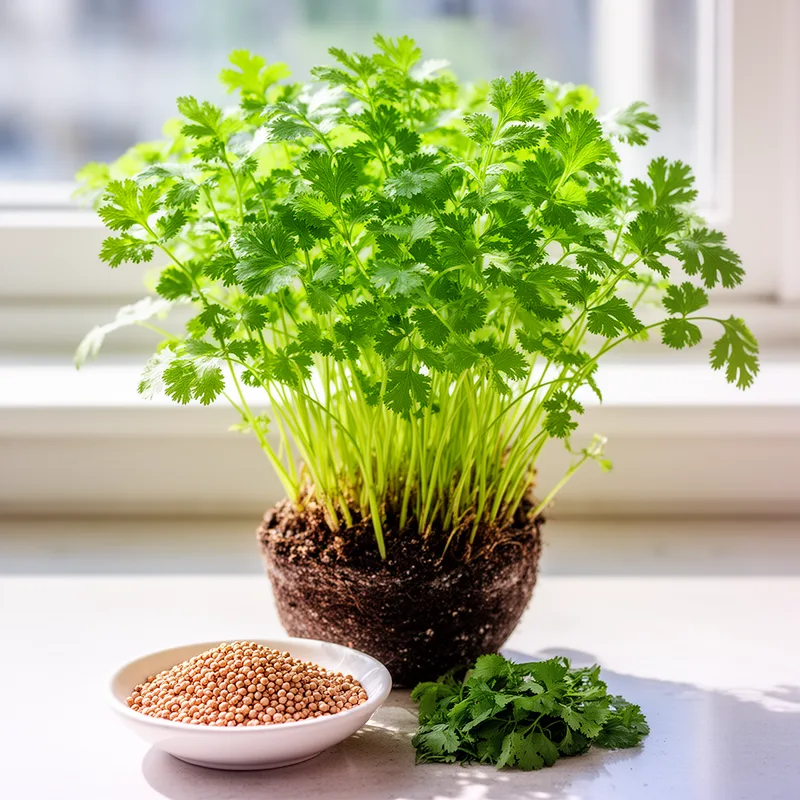
coriander plant
- noun
- /ˈkɔːriˌændər plænt/
- She grew a coriander plant on her kitchen windowsill for easy access to its fragrant herbs.
Examples
-
Many Indian recipes call for fresh leaves from the coriander plant.
-
The coriander plant thrives in well-drained soil and plenty of sunlight.
-
The coriander plant grows well in sunny areas.
-
I love adding fresh coriander plants to my dishes.
-
The chef garnished the dish with fresh leaves from the coriander plant to enhance its flavor.
-
In her garden, she cultivated a coriander plant for use in various cuisines.
-
Many people enjoy the bright taste of the coriander plant in their salsa recipes.
Synonyms

 41
3.5
41
3.5

An herb with fresh green leaves used to add flavor to food, also called coriander
 5
2.8
5
2.8
Fresh green leaves that add flavor to food

An herb with fragrant leaves and small seeds used in cooking, called coriander or cilantro

A green herb with flat leaves used to add fresh flavor to food
How Aromatic

Surface Forms
Morphology
The phrase is a straightforward noun–noun composition: 'coriander' (the herb) + 'plant' (a living organism), so the meaning 'the plant that is coriander' is directly derivable from the parts. This compositional pattern is common across languages and follows basic English noun modification, so a B1 learner who knows both words will readily understand it.
Etymology
Coriander plant gets its name from an old word because some people thought the fresh leaves smelled a little like bugs, while the dried seeds were used as a warm 'spice' in cooking. So, the name points to the real herb that gives green leaves (called 'cilantro') and the seeds cooks use.