
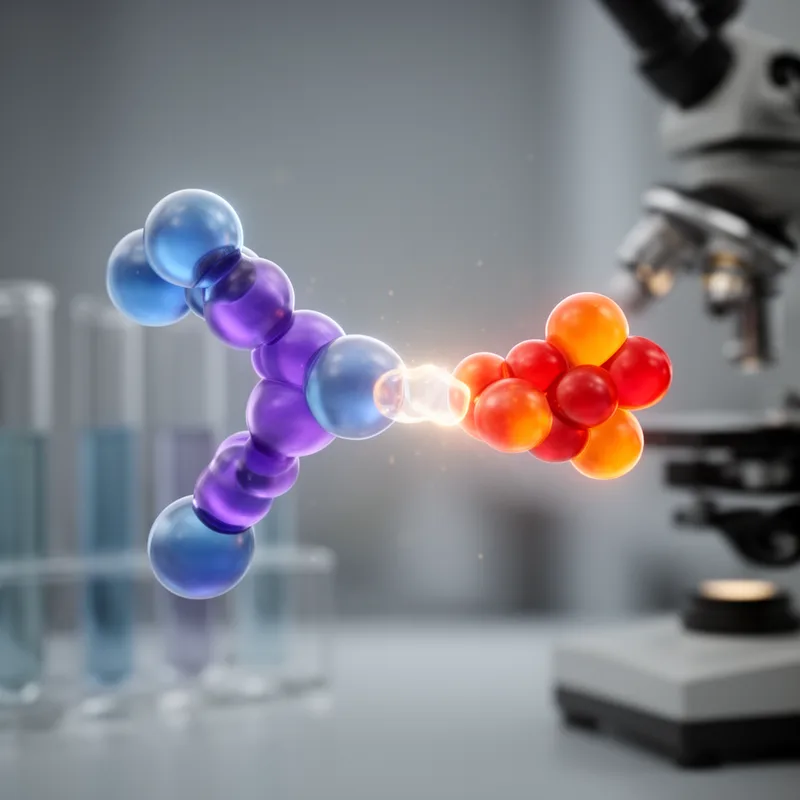
conjugation
- noun
- /ˌkɒn.dʒʊˈɡeɪ.ʃən/
- Specialized
- Glutathione S-transferases are a family of enzymes for detoxification by catalyzing the conjugation of many hydrophobic and electrophilic compounds with reduced glutathione.
Examples
-
Plain polysaccharide antigens are often poorly immunogenic, creating a poor response in infants and young children, but these polysaccharide antigens can be attached to a protein carrier by means of conjugation.
Academic text (2011) -
What do we know about the complex conjugation conjugate of A?
-
That's all that's left after we take into account the the little intricate details of complex conjugation V of X.
-
This was shown by the conjugation of monomethyl-auristatin E to an anti-HER2 affibody, which was found to be cytotoxic to cells overexpressing HER2 in vitro.
Academic text (2017) -
And from their chapter on Hib: "Conjugation is the process of chemically bonding a polysaccharide (a somewhat ineffective antigen) to a protein carrier, which is a more effective antigen."
Blog text (2) -
The process of conjugation transforms a harmful substance into a water-soluble form, facilitating its removal from the body.
-
In pharmaceuticals, conjugation is used to improve the efficacy of drugs by attaching them to carrier molecules.
-
Conjugation with glucuronic acid usually takes place in the liver but can occur in other tissues.
Antonyms

- Specialized


 1
7.0
1
7.0
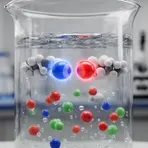
A chemical process in which a molecule breaks into smaller parts or ions
Surface Forms
Morphology
conjugation = conjugate (semi-transparent) = con + jug + ation
Derived from 'conjugate' in the sense of linking or joining; the chemical/biochemical sense (linking molecules) is a specialized technical extension that may not be fully predictable for general learners.
Etymology
Conjugation comes from con- 'together' and jugare 'to join', with the image of things linked like a yoke. That's why in chemistry conjugation means joining two molecules or groups to form a linked compound.