
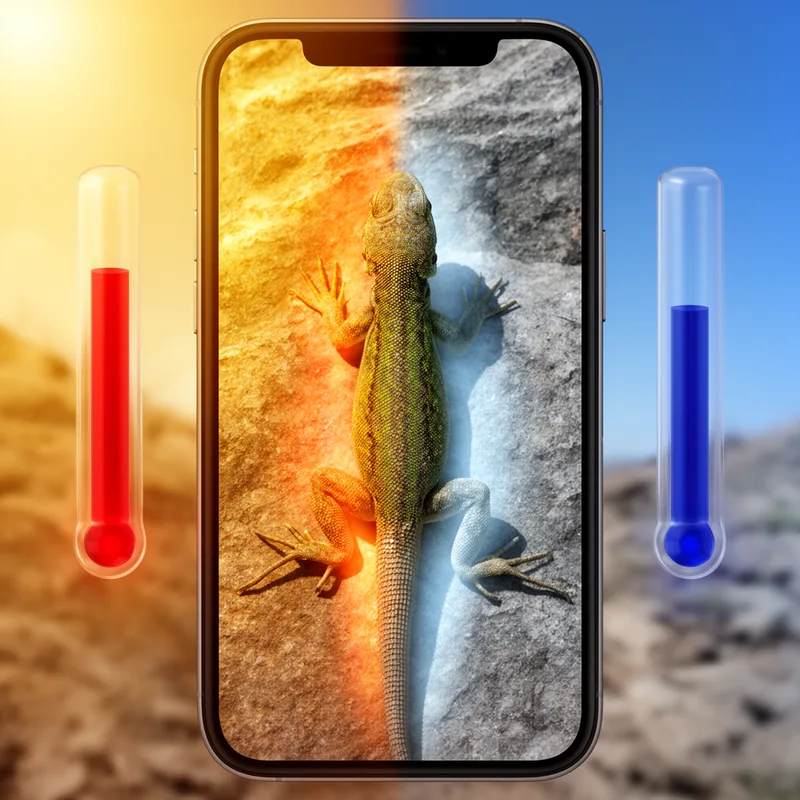
cold-blooded
 5
3.7
5
3.7

- adjective
- /koʊldˈblʌdɪd/
- Specialized
- These cold-blooded reptiles do not chew or dismember their prey.
- cold-blooded reptiles
- cold-blooded creatures
- cold-blooded animals
Examples
-
Everyone knows a tortoise is a cold-blooded reptile... that moves about half a mile an hour.
-
Cold-blooded animals do not absorb medicine very fast at all.
-
A: "Since they are cold-blooded, they like to come out when it's warm."
Blog text (25) -
A: "Snakes are cold-blooded, so they like to come out when it's warm and sun themselves.
Blog text (25) -
Fish are cold-blooded.
Blog text (25) -
Everyone knows a tortoise is a cold-blooded reptile... that moves about half a mile an hour.
-
Warmth is important for an iguana since they're cold-blooded creatures and can't regulate their temperature alone.
Blog text (21) -
Cold-blooded animals do not absorb medicine very fast at all.
-
Miles O'Brien: Like all cold-blooded animals, lobsters are highly temperature-sensitive.
Synonyms


 1
9.1
1
9.1
Having a body temperature that changes with the surrounding air or water

Body temperature changes with the air or water around the animal

Having a body temperature that changes with the environment, like cold-blooded animals

An animal, often a reptile or fish, whose body temperature changes with the surroundings
Antonyms

- Specialized
4
3.5
An animal that keeps a steady temperature inside its body, like humans and birds
How Warm-Blooded

Surface Forms
Morphology
Etymology
The word cold-blooded comes from the simple parts cold and blood, meaning 'cold' and 'blood'. It was first used for animals whose body heat changes with the outside temperature, so their blood can be 'cold' and their activity depends on the warmth.