

to clam
 2
7.5
2
7.5

- verb
- /klæm/
- US
- He decided to clam in the early morning before the tide came in.
Examples
-
- Clam it, snaps!
-
Ours is but to clam up and eat.
-
The small plates included a nice range of dishes from raviolis to sandwiches to sliders to falafels to salads to clam chowder.
Blog text (3) -
During the summer, many families love to clam at the beach, filling their buckets with fresh shellfish.
-
The children spent the afternoon clamming along the shore, excitedly digging for buried treasures.
Phrasal Verbs

- Informal
14
6.6
Stop talking suddenly because you are nervous or do not want to say anything
Compounds

- US
1
5.2
A cold creamy mixture of chopped clams and cream cheese eaten with crackers or chips

 1
3.3
1
3.3
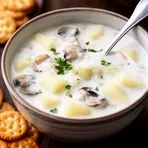
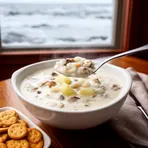
A thick creamy soup from New England made with clams, potatoes, onions, and milk
- Indian
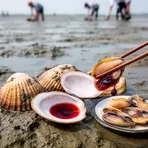
A shellfish with red blood that lives in muddy seashores and is eaten in parts of Asia
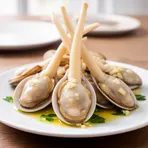

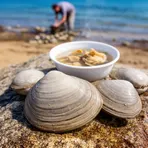

- US
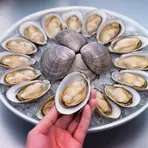
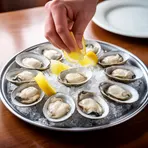
A large edible clam from the Atlantic coast whose shell was once used as money by Native Americans
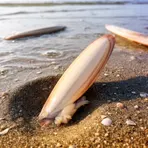
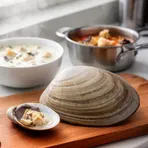

Surface Forms
Etymology
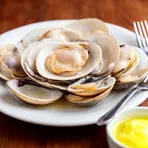
Clam (to dig for clams) comes from the noun clam, the shellfish, so to 'clam' is simply to gather those animals by digging in the sand. The verb is just the action of getting clams.