
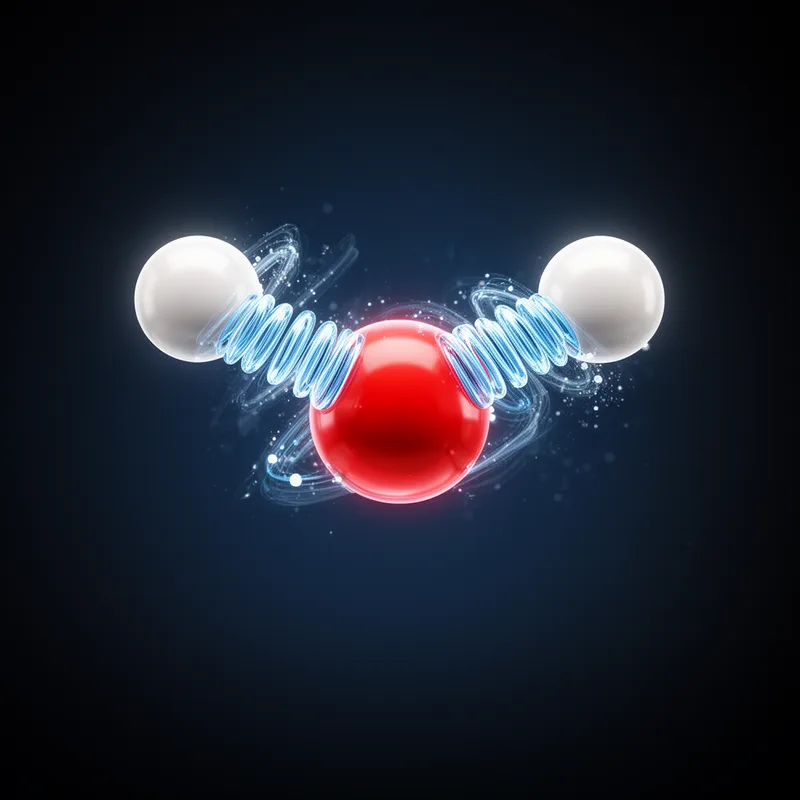
chemical bond
 1
3.4
1
3.4

- noun
- /ˈkɛmɪkəl bɑnd/
- Specialized
- We're going to have to be able to store energy in chemical bonds just like a plant does, storing it in the bonds through photosynthesis.
- strong chemical bond
- stored in chemical bonds
Loading YouTube…
Watch on YouTubeThese energies are comparable to the energies of chemical bonds.
- These energies are comparable to the energies of chemical bonds.
- So this force is responsible for magnets attracting or repelling, and it also gives us chemical bonds between atoms to form molecules.
Examples
-
When you burn it, you're breaking these chemical bonds with the help of oxygen, right?
-
The strength of the chemical bonds with hydrogen can be weakened with additives (n7) such as titanium dioxide in sodium aluminum hydride (NaAlH4).
Academic text (2004) -
We're gonna form chemical bonds using heat.
-
The potential energy in chemical bonds is real.
Blog text (16) -
The lye severs the chemical bond between the long-chain fat molecules and the glycerin.
Blog text (18) -
Over the next eight hours, the chemical bonds of the resin will rearrange themselves as the epoxy cures to form a strong, solid composite.
Academic text (2010) -
"Starch is made up of glucose molecules hooked to one another by a chemical bond known as an alpha-1,4 linkage," explains Bothast.
Academic text (2002) -
To achieve high storage capacity at low weight requires strong chemical bonds between hydrogen and light-atom host materials in stable compounds, such as lithium borohydride (LiBH4).
Academic text (2004) -
The organics can, in many cases, best be thought of as energy stored in chemical bonds (largely carbon bonds) rather than as reusable materials; they are generally exothermically oxidizable.
Academic text (1994) -
In a solid, atoms are rigidly locked in place by chemical bonds.
Synonyms
 33
5.1
33
5.1
A strong attraction that holds atoms together in a molecule

A force that pulls atoms together to form molecules
How Strong
- Specialized
1
3.8

- Specialized

 1
3.7
1
3.7
- Specialized
1
3.4
- Specialized
1
4.1
- Specialized
Surface Forms
Morphology
This is fully compositional: 'chemical' specifies the domain (relating to chemistry) and 'bond' denotes a connection or attraction, so their combination directly yields the meaning of an attraction between atoms or ions. The structure is cross-linguistically common (e.g. Spanish 'enlace químico'), so a B1 learner who knows both constituents will readily infer the MWE meaning.
Etymology
Chemical bond uses bond like a rope or link that holds things together and chemical to show it is about atoms and molecules. So the image of atoms 'holding together' explains why it means the pull that keeps atoms joined in a molecule.