
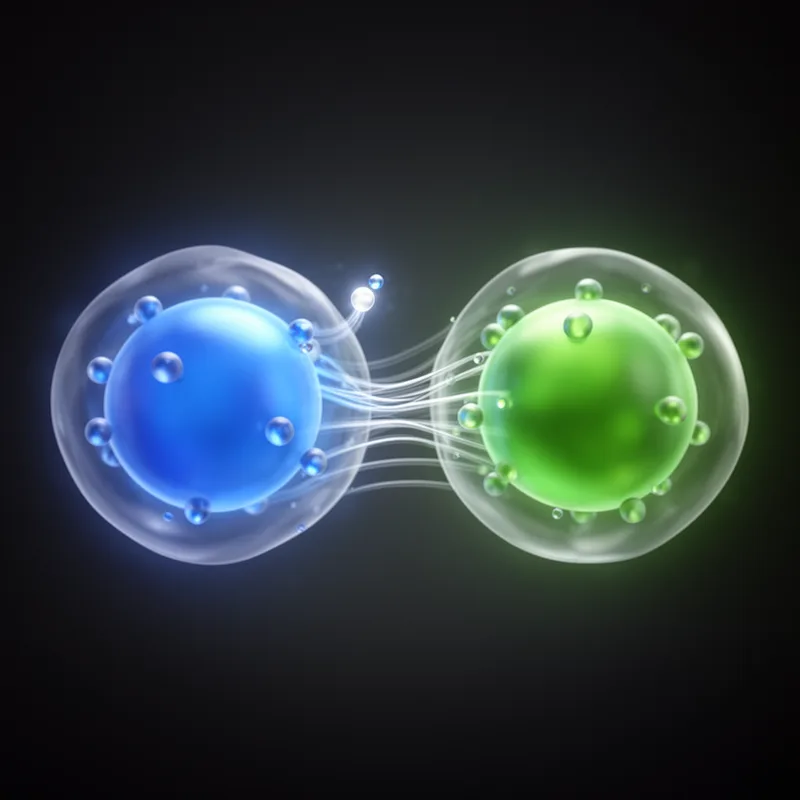
ionic bond


 1
3.7
1
3.7
- noun
- /aɪˈɒnɪk bɒnd/
- Specialized
Examples
-
So that would be like thinking about an ionic bond, right?
-
An ionic bond forms when one atom transfers an electron to another, resulting in charged ions that attract.
-
The strong ionic bonds in sodium chloride ensure that it remains a solid at room temperature.
-
In chemistry class, we learned that the formation of an ionic bond involves electron transfer between atoms.
Synonyms
A force that holds positive and negative atoms after one atom gives an electron to another

A bond formed when one atom loses an electron and another gains it, so opposite charges attract
How Strong
- Specialized
1
3.8

- Specialized
33
5.1
- Specialized
1
3.7
- Specialized
1
4.1
- Specialized
Surface Forms
Morphology
The noun phrase is compositionally built: 'ionic' means 'pertaining to ions' and 'bond' means an attraction holding atoms together, so a learner who knows both constituents can infer it denotes a bond between ions. While the precise mechanism (electron transfer) is a chemistry detail, the core meaning is predictable from the parts and is expressed similarly across languages, making it readily comprehensible.
Etymology
Ionic bond comes from tiny charged particles called ions. When one atom gives away an 'electron' and another takes it, they become 'positive' and 'negative' and pull together like opposite ends of magnets, so an ionic bond is the strong attraction between those ions.