

carotid
 23
4.4
23
4.4

- noun
- /kəˈrɑːtɪd/
- Specialized
- They squeeze the carotid artery and restrict blood flow to the occipital lobe.
- carotid artery
- internal carotid
- external carotid
Examples
-
During a cluster headache, the internal carotid artery floods with blood, exacerbating the intense pain.
Academic text (2011) -
Angiography of the right internal and external carotid arteries excluded aneurysmal dilation and a vascular tumor.
Academic text (2006) -
Carotid pulse is strong and regular.
-
The carotid artery was cut, right?
-
Both the external and internal carotid arterial systems were found to be intact.
Academic text (2002) -
The internal and common carotid arteries were clamped while talking to the patient.
Academic text (2007) -
Then he reached for the man's neck, feeling for the carotid artery, for a pulse.
Fiction book (2001) -
The pulse on your carotid artery remained steady as you pleaded your innocence.
-
The doctor felt for the carotid pulse in the patient's neck to check their heart rate.
-
After the accident, the paramedic quickly examined the man's carotid artery for signs of blood flow.
Synonyms
 15
3.8
15
3.8
A large blood vessel in the neck that carries blood to the head and brain

A large blood vessel in the neck that carries blood to the head and brain
Compounds
- Specialized
15
3.8
A large blood vessel in the neck that carries blood to the head and brain
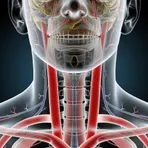
- Specialized
1
3.0
A large blood vessel on each side of the neck that carries blood to the head and neck
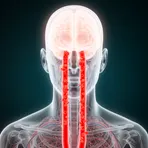
- Specialized

 1
3.3
1
3.3
A large blood vessel on each side of the neck that carries blood to the head and brain

- Specialized
1
5.6
A blood vessel that carries blood to the face, tongue, and outer parts of the head
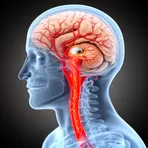
- Specialized
1
4.5
A large blood vessel that carries blood to the brain and eyes
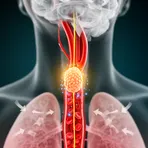
- Specialized
A small group of cells near the split of the neck artery that senses blood oxygen and helps control breathing

- Specialized
A network of nerves around a main neck artery that helps control blood flow to the head and neck

- Specialized
A blood vessel that carries blood from the neck to the face, tongue, and outer parts of the head
Surface Forms
Morphology
carotid = carot + id
Formed from the classical combining form 'carot-' plus the suffix '-id'; these are not productive, recognizable English morphemes for average learners, so the meaning is not derivable from familiar parts.
Etymology
The word carotid comes from an old Greek root karotis that meant 'to stupefy', because pressing this neck artery can make someone faint. So a carotid is one of the main neck arteries that carry blood to the brain.