
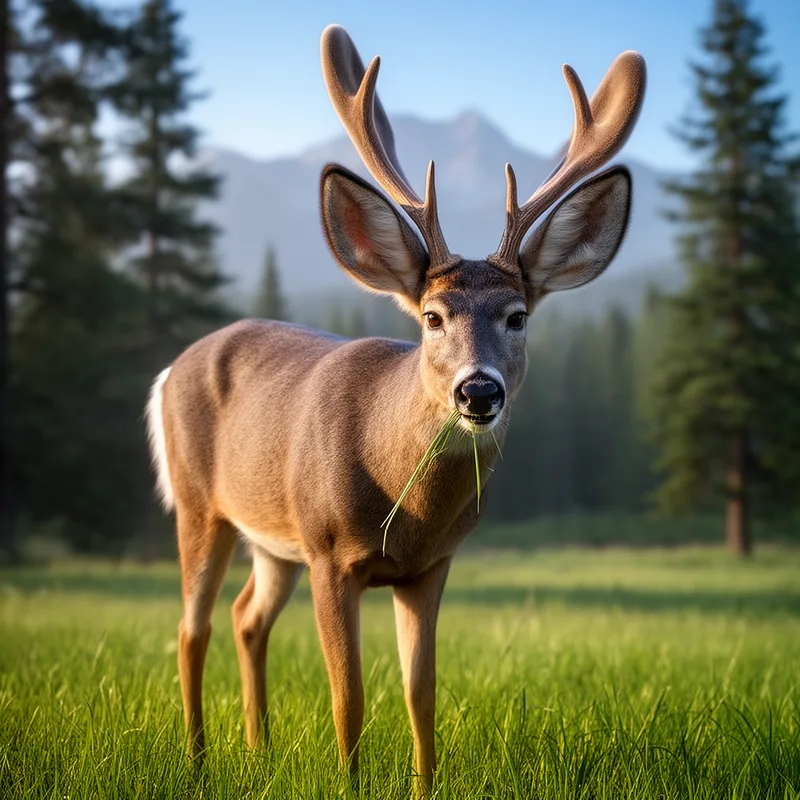
burro deer
- noun
- /ˈbʌroʊ dɪr/
- Specialized
- The burro deer gets its name from its unusually large ears, resembling those of a donkey.
Examples
-
Unlike other deer, the burro deer has distinctive forked antlers.
-
We spotted a burro deer grazing near the edge of the forest.
-
I saw a burro deer grazing in the meadow.
-
The burro deer has distinctive large ears.
-
The burro deer is easily recognized by its large ears and unique forked antlers.
-
While hiking, we encountered a burro deer that was peacefully feeding on some grass.
-
Many wildlife enthusiasts come to see the burro deer for its impressive and distinct antlers.
Synonyms
 330
1.0
330
1.0

A wild animal with hooves and antlers that lives in forests and fields
 4
5.6
4
5.6
A large deer with long ears and antlers that split into two in western North America
 1
8.7
1
8.7
A type of deer with a black-tipped tail found in western mountains


 1
7.0
1
7.0
A deer in western North America with a black-tipped tail
 1
6.7
1
6.7
A deer that lives in western North America and has a black tail

A deer from North America with long ears and forked antlers

A deer with a black tail that lives in forests of the western mountains
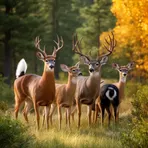
A group of North American deer that includes the white-tailed deer and mule deer
How Big

Surface Forms
Morphology
burro + deer
The compound is partially compositional: a learner who knows 'burro' (donkey) and 'deer' can infer it denotes a kind of deer with burro-like features (e.g. large ears), so the basic sense is recoverable from the parts. However, the precise taxonomic information (that it is a mule deer of western North America with two-pronged antlers) is not predictable from the constituents, so the relation is only partially transparent.
Etymology
Burro deer gets its name from Spanish burro, meaning 'donkey', because this deer has very large ears that look like a donkey's. So the name helps you picture a deer with donkey-like ears and forked antlers.