

bud brush
- noun
- US
- Sheep prefer bud brush in spring when its leaves are most tender.
Examples
-
The rancher rotated his flock to graze on the bud brush during the dry season.
-
Because of its resilience, bud brush thrives in arid regions where other forage is scarce.
-
The bud brush is essential for sheep grazing.
-
Farmers often plant bud brushes for better forage.
-
Because of its resilience, bud brush thrives in arid regions where other forage is scarce.
-
Sheep prefer bud brush in spring when its leaves are most tender.
-
The rancher rotated his flock to graze on the bud brush during the dry season.
Synonyms

A bush from the western United States that lives many years and that sheep eat, called budsage
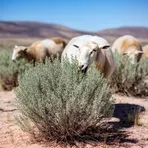
A shrub that grows in the western United States that sheep eat

A grass that lives many years in western North America and that farm animals eat
Surface Forms
Morphology
The constituents 'bud' (a plant swelling) and 'brush' (a thicket or low shrubs) combine in a straightforward, compositional way to denote a type of shrub or plant. This kind of compound naming for plants is common in English, so a B1 learner who knows both words (and sees the grazing context) would be able to infer that it is a plant used for sheep forage.
Etymology
Bud brush may come from the plant's look and how animals eat it. One popular idea says bud refers to the young shoots sheep eat and brush to its bushy shape, so the name came to mean 'a plant used as food for sheep'.

